Explore the Victor Harbor Art Trail – Experience public art, history, and imagination at your own pace
Public art is the creative expression of artists presented in public spaces – outside the walls of galleries – where it is freely accessible to all. It enhances our shared places, tells our stories, and helps shape the identity of our communities.
In Victor Harbor, public art celebrates local landscapes, maritime heritage, Ngarrindjeri and Ramindjeri culture, and community spirit. Curated by the City of Victor Harbor, this trail showcases artworks that are iconic, interpretive, and community-driven, connecting you to the heart of the Fleurieu Peninsula.
Explore the vibrant mix of murals, sculptures, mosaics, and installations that make Victor Harbor’s streets, reserves, and foreshore not just places to visit, but places to experience.
Prefer a hardcopy? Download the printable version here.
Walk options
WALK OPTIONS
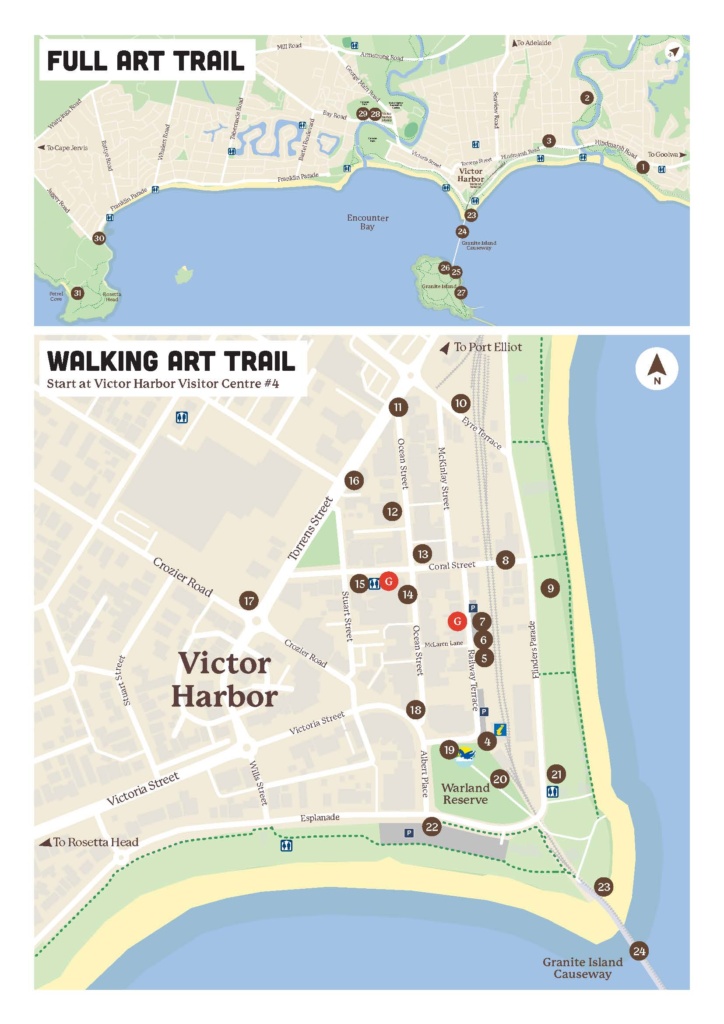
THE FULL TRAIL: 1 – 31
Allow 5 to 6 hours to walk the entire trail from number 1, Kondoli the Whale at Kleinig’s Hill Lookout to number 31, the Longkewar Lookout.
FROM WHALE TO WALL: 1 – 3
Allow 40 minutes return, to walk from number 1, Kondoli the Whale at Kleinig’s Hill Lookout to number 2, Victor Harbor Primary School’s 150 Anniversary Mural, to number 3, Bendigo Bank Mural by Cedric Vercoe, and back to the lookout.
HEART OF THE TOWN: 4 – 24
Starting at number 4, Visitor Centre, visiting each artwork in order and finishing at number 24, the Causeway, Kaldowinyeri Yarluki – the longest known integrated Aboriginal artwork in Australia! Allow around an hour.
OVER THE SEA: 23 – 27
Starting at number 23, Ngurunderi, cross the Causeway and find the artworks on Kaiki, Granite Island. Allow 40 minutes return or an hour and a half to walk around the whole island loop.
HARBOUR TO HEADLAND: 30 – 31
The walk from number 30, Whalers Well, to number 31, the Longkewar Lookout takes you up and over the Bluff for breathtaking views. There are some steep sections. Allow 45 minutes to an hour return.
01
Kondoli the Whale
Kleinig’s Hill Lookout,
42 Hindmarsh Rd, McCracken
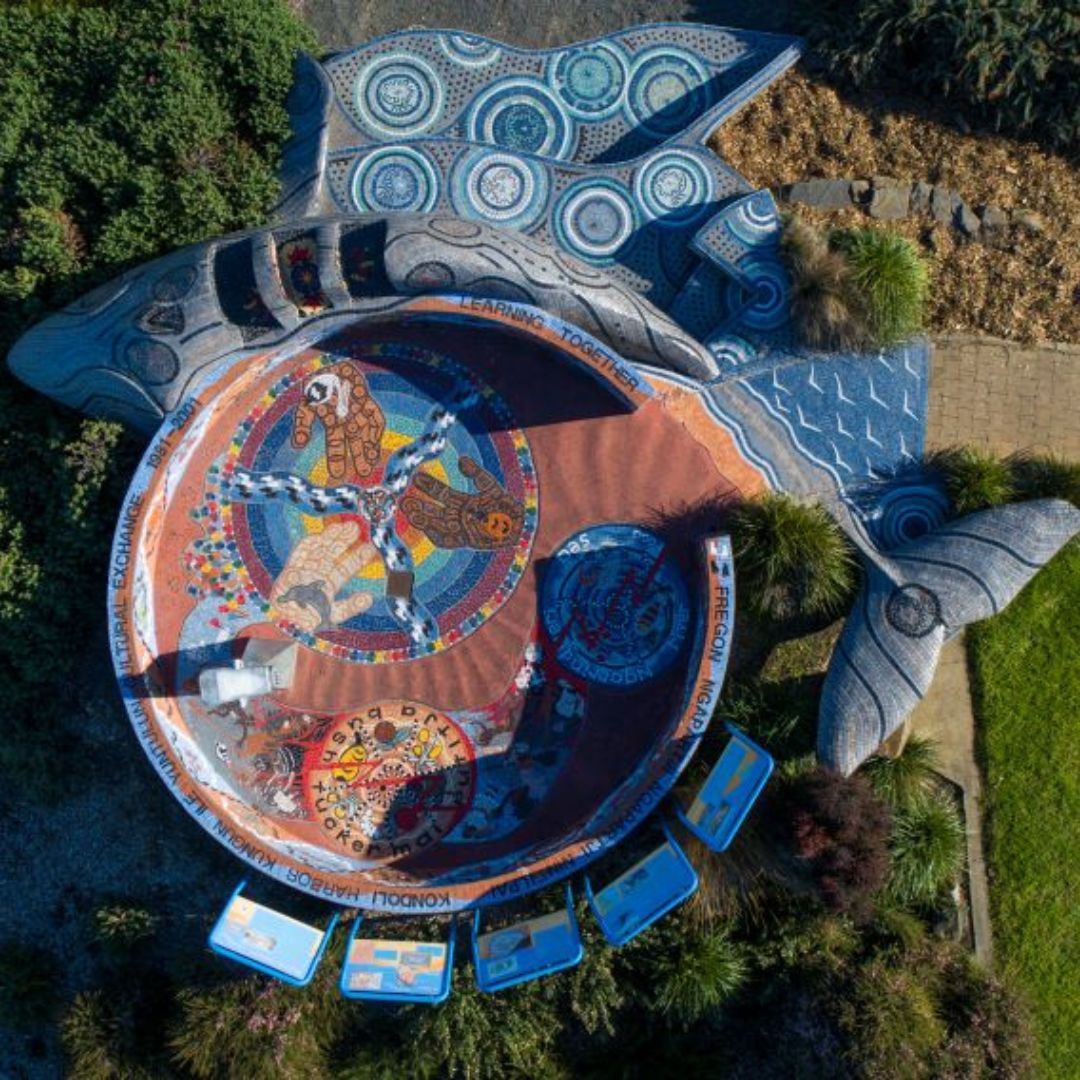
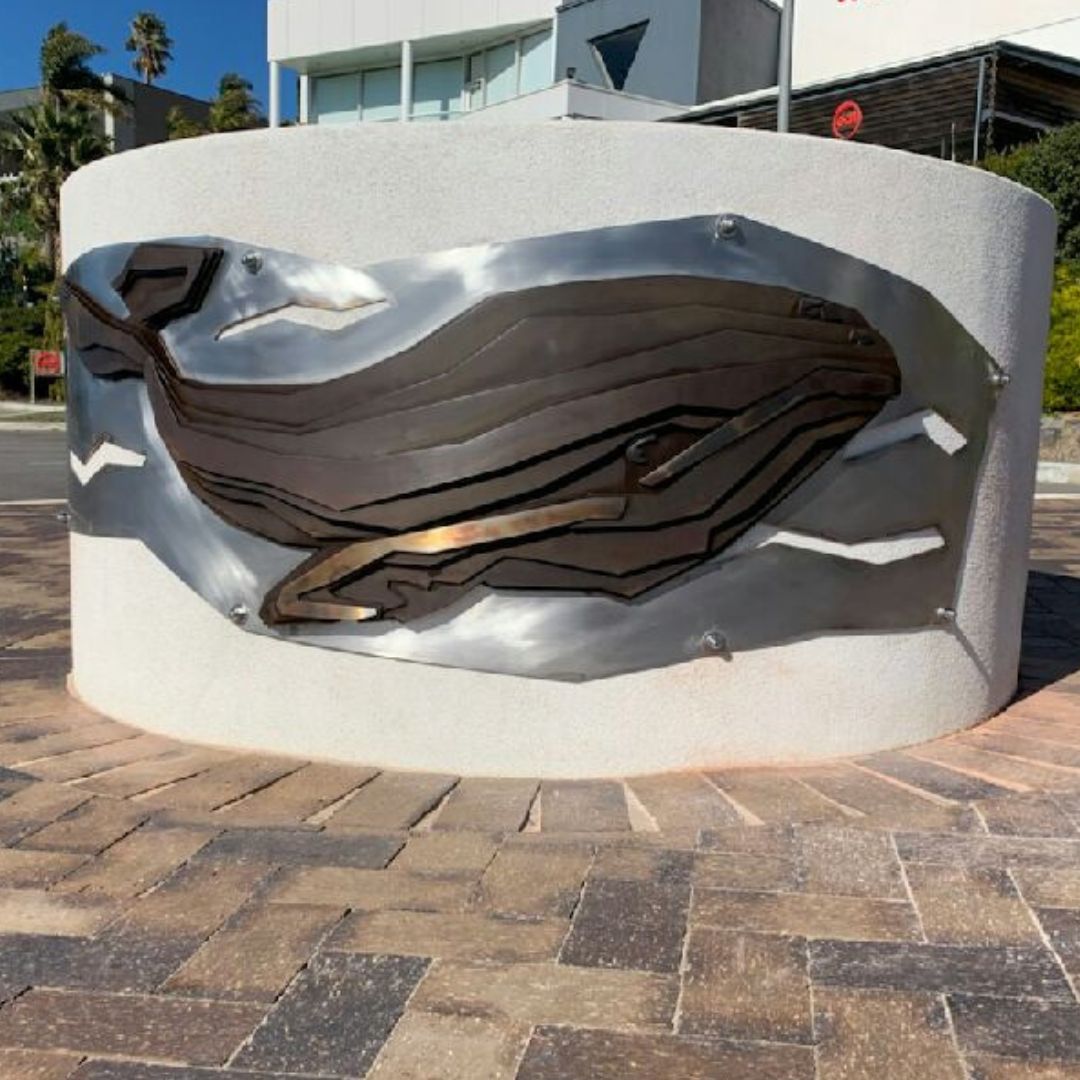
Located at Kleinig’s Hill Lookout on Hindmarsh Road, Kondoli the Whale is a significant Indigenous mosaic sculpture created in the late 1990s by lead artist Lyn Walsh and a team of Ngarrindjeri and Ramindjeri artists. The work tells the Dreaming story of Kondoli, a powerful whale being and keeper of fire, whose journey helped shape the local coastline. The site offers a place for reflection on deep time, connection to Country, and shared heritage.
02
150th Anniversary Mural
19 The Parkway, Victor Harbor
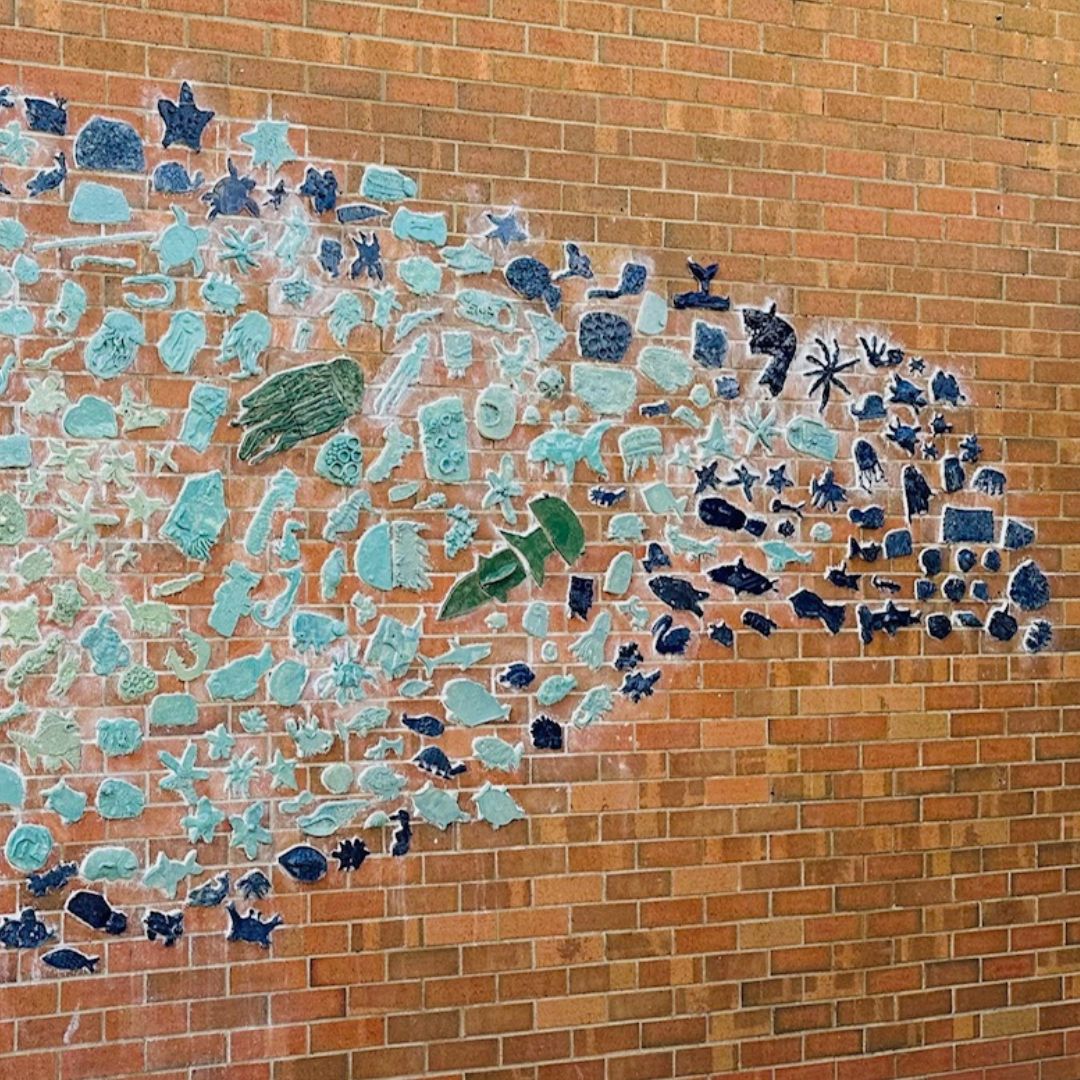
To mark its 150th anniversary in 2024, Victor Harbor Primary School unveiled a mural by renowned ceramic artist Honor Freeman. Commissioned through the City of Victor Harbor’s Arts and Culture Grant program and supported by Community Bank Fleurieu – Bendigo Bank, it was launched at a school assembly. This artwork is generally not accessible to the public, however visits outside of school hours are permitted.
03
Bendigo Bank Mural
Connect Victor Harbor, 138 Hindmarsh Rd
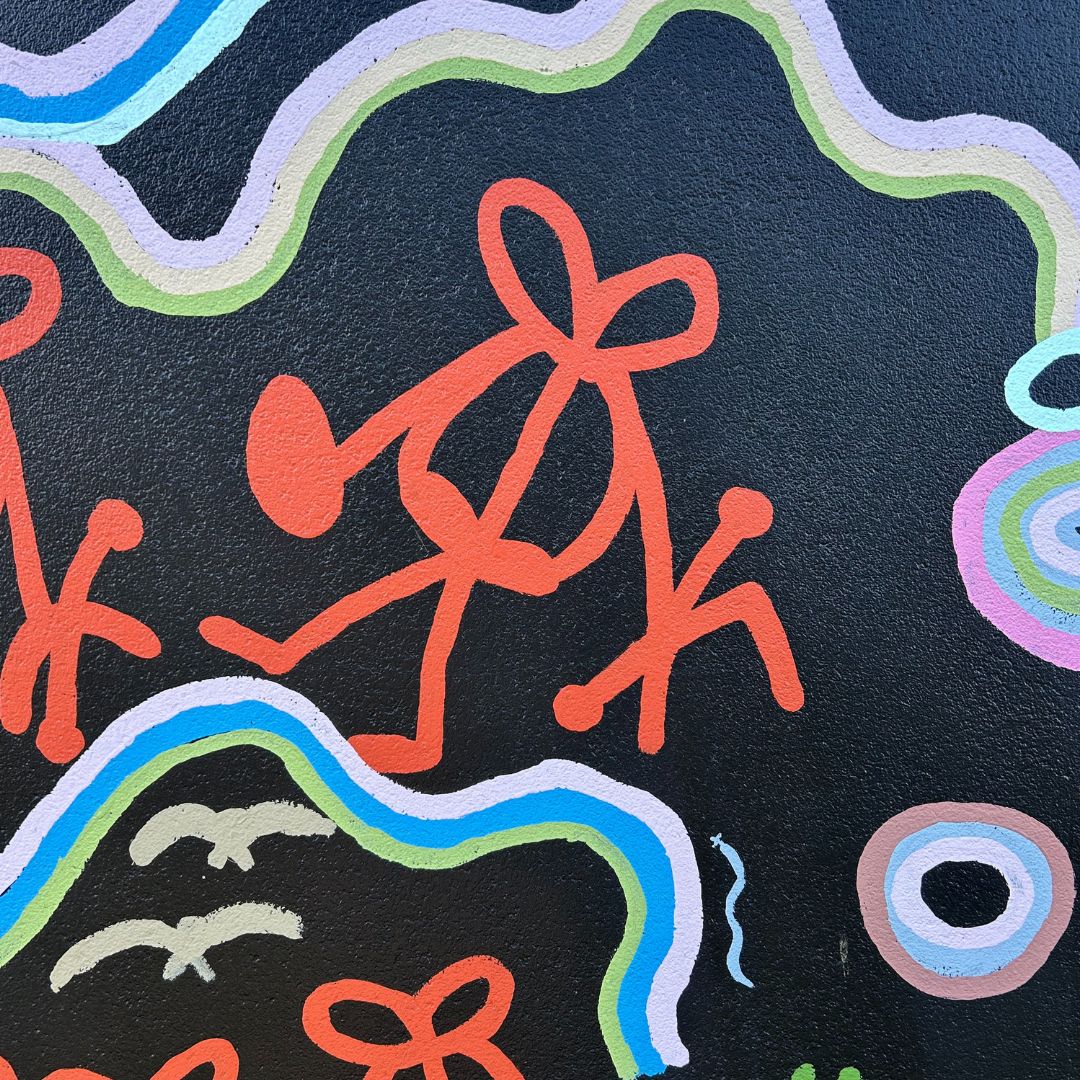
Created by Ngarrindjeri-Narangga artist Cedric Varcoe, this striking mural on the Bendigo Bank building celebrates the rich cultural heritage of the region. Commissioned through the City of Victor Harbor’s Arts & Culture Grant program, the artwork features traditional Ngarrindjeri motifs and storytelling elements that highlight the deep connection between the local community and the land. Completed in 2019, the mural is a powerful reminder of the region’s indigenous history and cultural significance.
04
Murals – Local Sea Life and Mother and Calf
Visitor Centre, 2 Railway Terrace
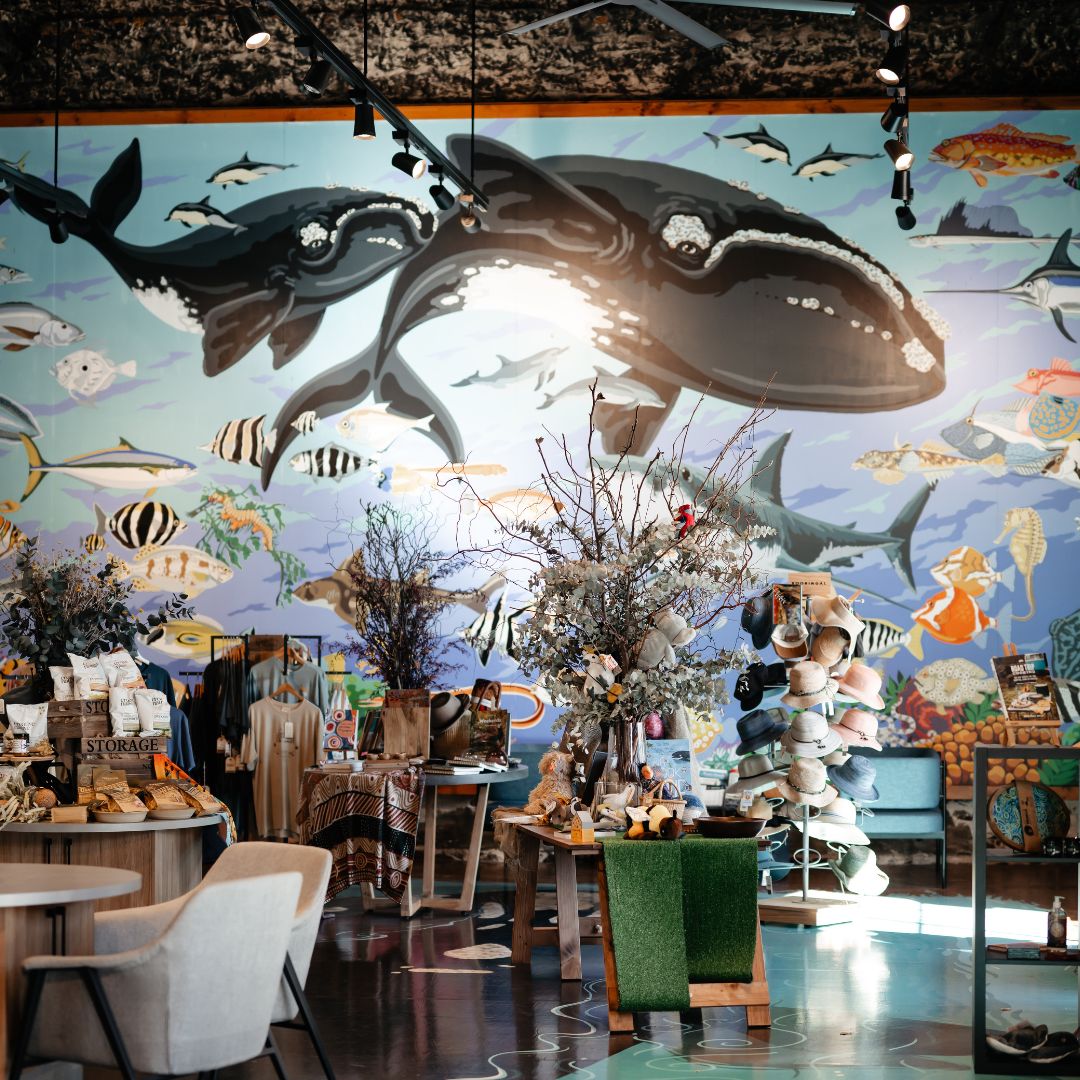
On the wall, a large-scale mural by local Goolwa artist James Stewart showcases vibrant local sea life. Measuring around 5 x 10 metres and painted in acrylic on canvas, it was once believed to be the largest stretched canvas artwork in the Southern Hemisphere. On the floor, a life-sized depiction of a Southern Right Whale mother and calf, affectionately known as Buttons and Bobby, was originally painted in 1994 by artist Barbary O’Brien. The mural was revitalised in 2022, with detailed callosities added to help identify the celebrated duo.
05
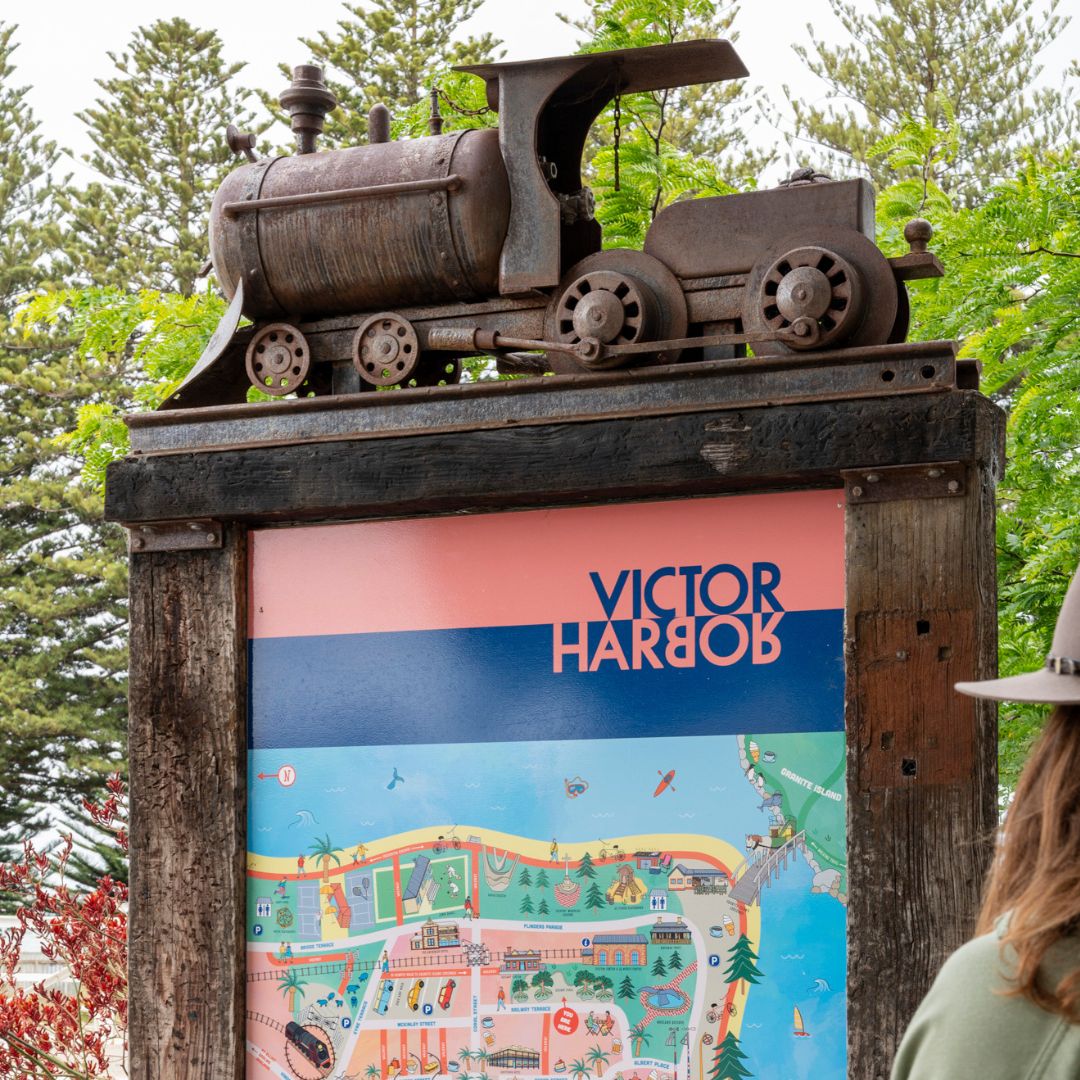
Wayfinding Directional Signage
Railway Terrace, Victor Harbor
This striking engine-themed sign uses handcrafted metalwork that blends traditional techniques with contemporary design. The piece, by local artist Benjamin Young, celebrates Victor Harbor’s rail heritage and adds artistic character to the streetscape. Complementing this is a series of illustrative panels by artist Pip Kruger, located throughout the CBD. Her designs combine stylised maps, interpretive graphics, and soft coastal colour palettes that reflect the local environment.
06
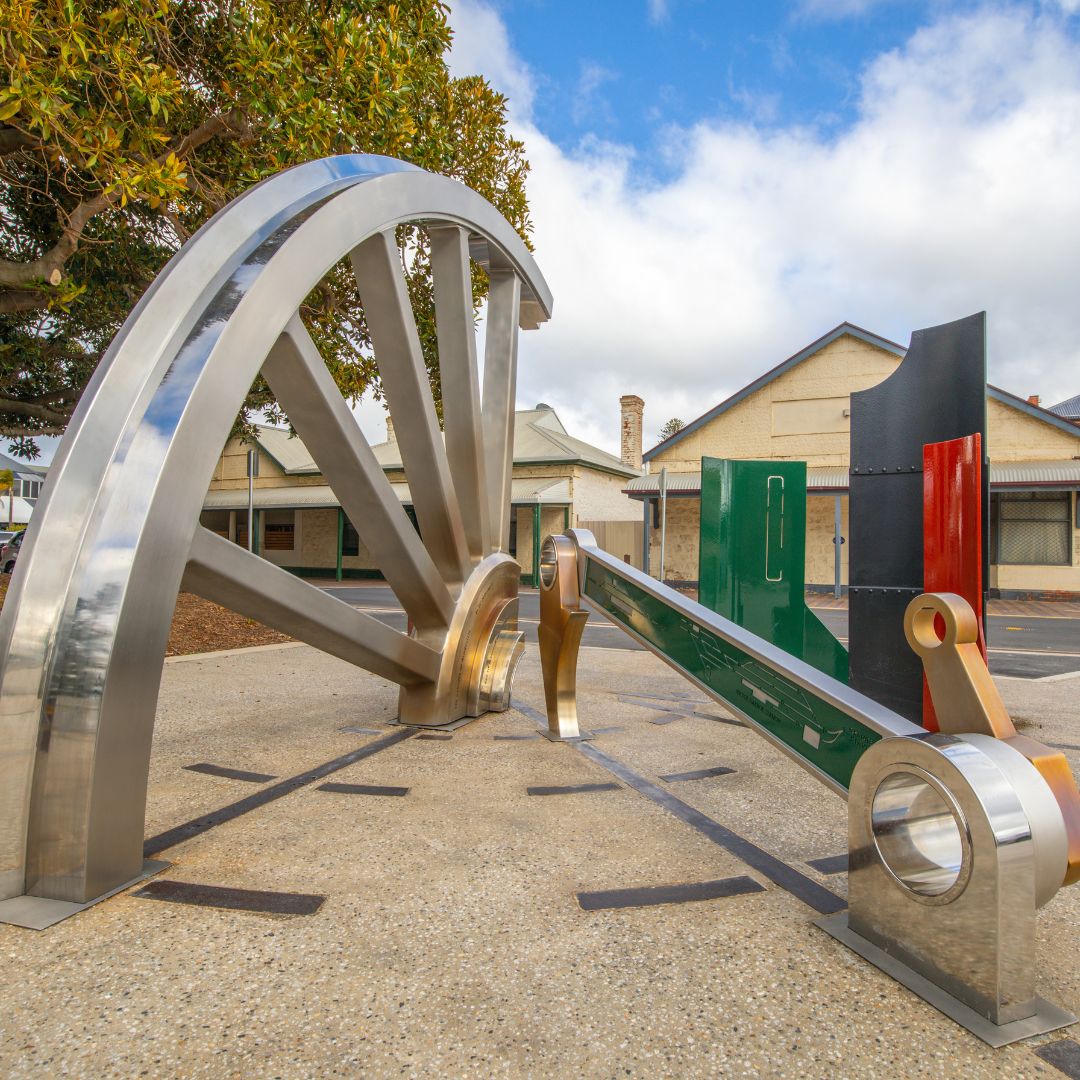
Connection
Railway Terrace, Victor Harbor
Connection is a striking sculpture by local artist Matt Turley that draws inspiration from the mechanical forms of steam locomotives. Its dynamic, industrial aesthetic reflects Victor Harbor’s proud railway heritage and the town’s role as a key transport hub. Commissioned by the City of Victor Harbor, the artwork symbolises unity – connecting past and present, people and place. As part of the same vision, two unique, custom-made bicycle racks – also designed and fabricated by Turley – are installed within the Railway Precinct.
07
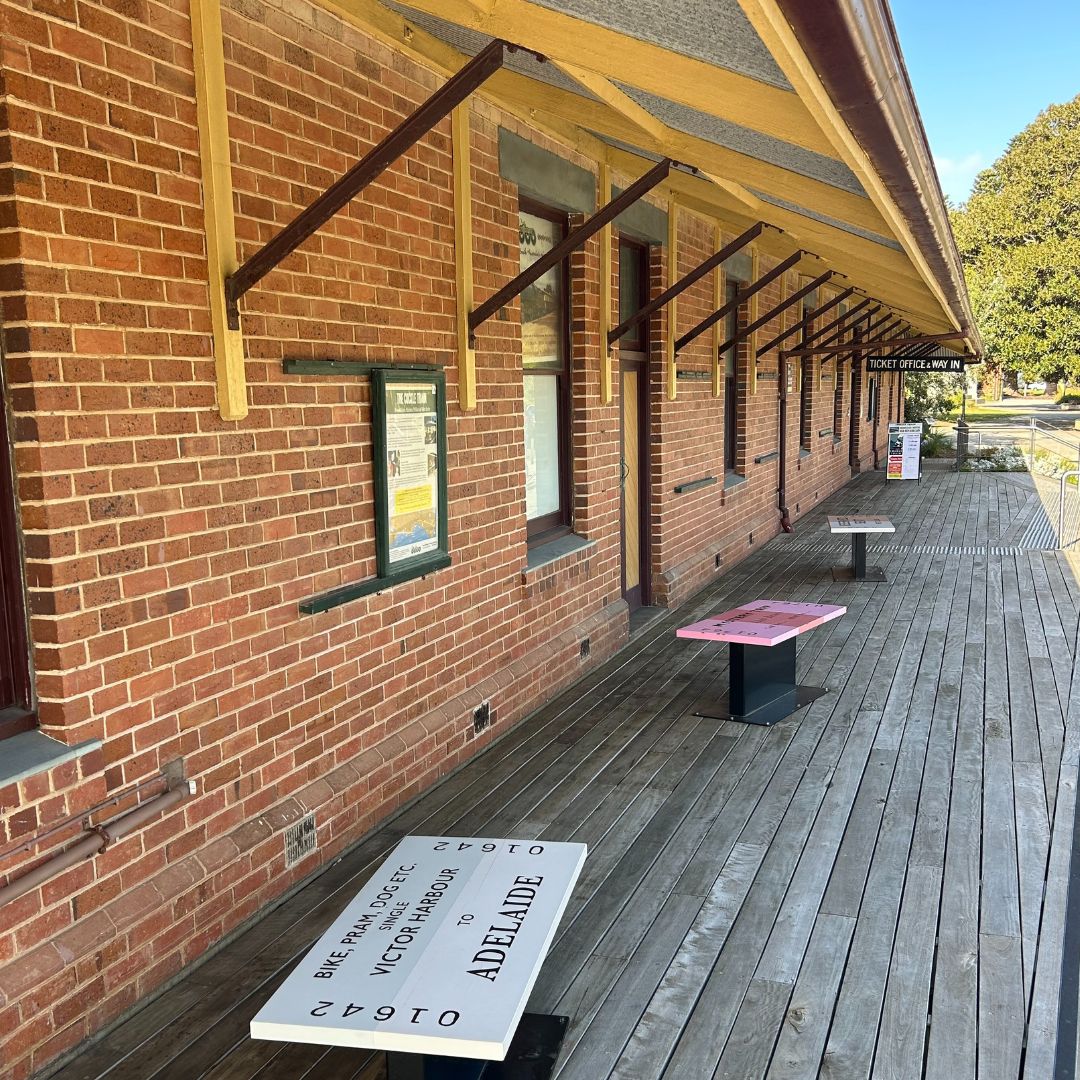
Ticket Seats
5 Railway Terrace, Victor Harbor
Located at the historic Victor Harbor Railway Station, the Ticket Seats are a sculptural seating installation by artists Trevor Wren and Danica McLean. Commissioned by the City of Victor Harbor, the seats
blend function and art, drawing inspiration from the town’s railway heritage. Their thoughtful design invites visitors to rest, reflect, and connect with the area’s cultural identity. Also, integrated in the surrounding plaza and walkways are corten steel inlays featuring the names of former railway stations and sidings from the Mount Barker to Victor Harbor line.
08
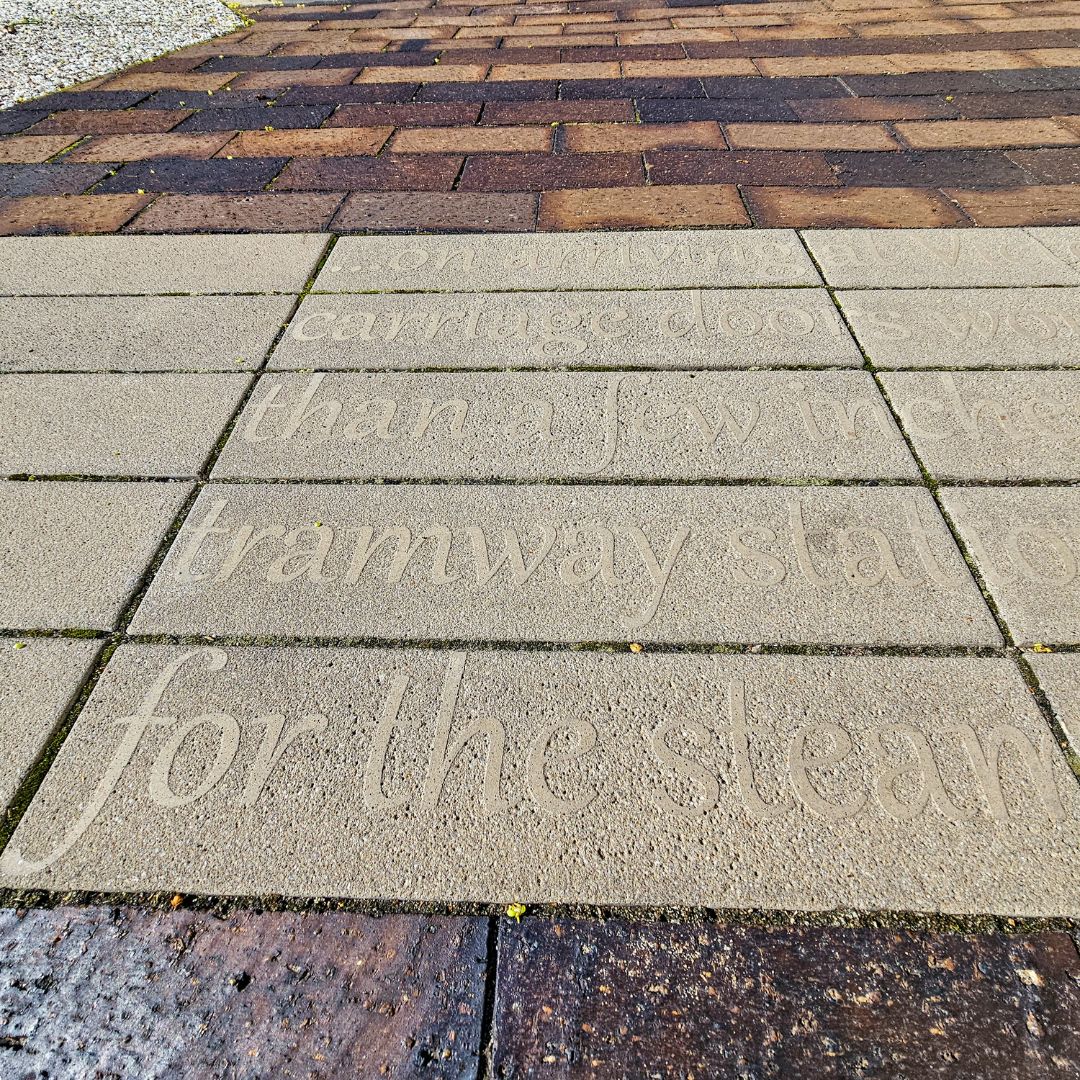
Embedded text inlays
Eastern stretch of Coral Street, Victor Harbor
Look closely and you’ll find embedded text inlays in the footpath capturing sayings, memories, and voices from the town’s railway past. These etched phrases reflect the language, humour, and experiences of those who once worked on or around the historic railway. This quiet yet evocative feature invites passersby to pause and reflect on the community stories that shaped Victor Harbor’s identity, adding depth to the streetscape through memories preserved in the pavement.
09
Soldiers Memorial Gardens Amphitheatre
20 Flinders Parade, Victor Harbor
The amphitheatre is a community venue for events, ceremonies and performances. Designed by WAX Design, it blends public art with landscape architecture to honour the cultural heritage of the Ngarrindjeri and Ramindjeri people. Indigenous place names etched into the surfaces, oriented from the land towards the sea symbolise the First Nations perspective. Conversely, English names are sandblasted into the steps facing inland, representing settlement and arrival. The design functions as a visual and physical narrative, connecting visitors to the site’s layered past.
10
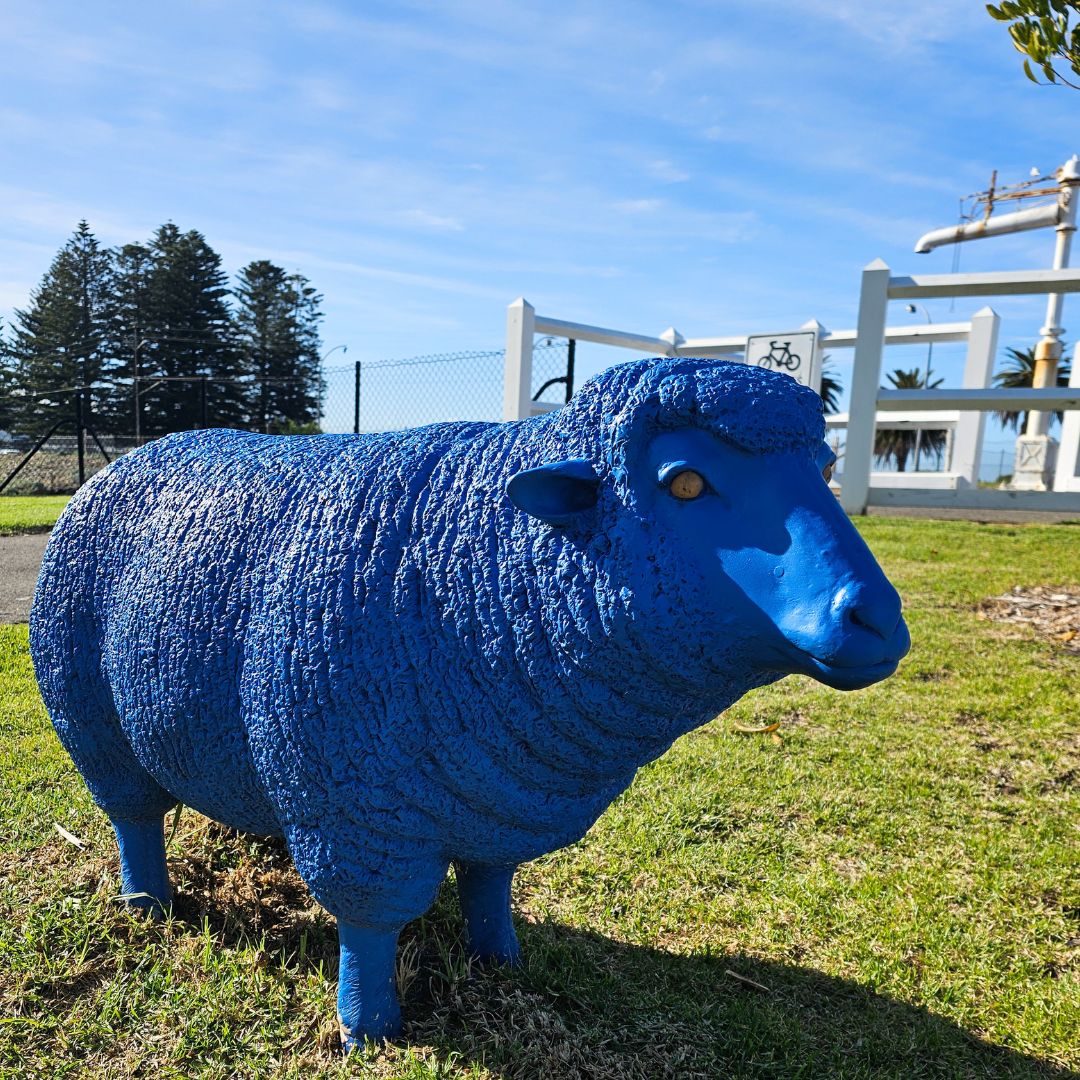
Blue Sheep Sculptures
Railway Turntable, Eyre Terrace, Victor Harbor
Unveiled in July 2018, the Blue Sheep Sculptures pay playful tribute to the livestock once transported by rail in Victor Harbor. Created by Karl Meyer and Marijana Tadic, the bright blue sheep are scattered around the former turntable site. The area also features a carriage-inspired shelter, brass-insert pavers showing historic trains, replica turntable gates and fencing, and a sheep run, all combining to reflect the region’s rail and agricultural heritage through art and design.
11
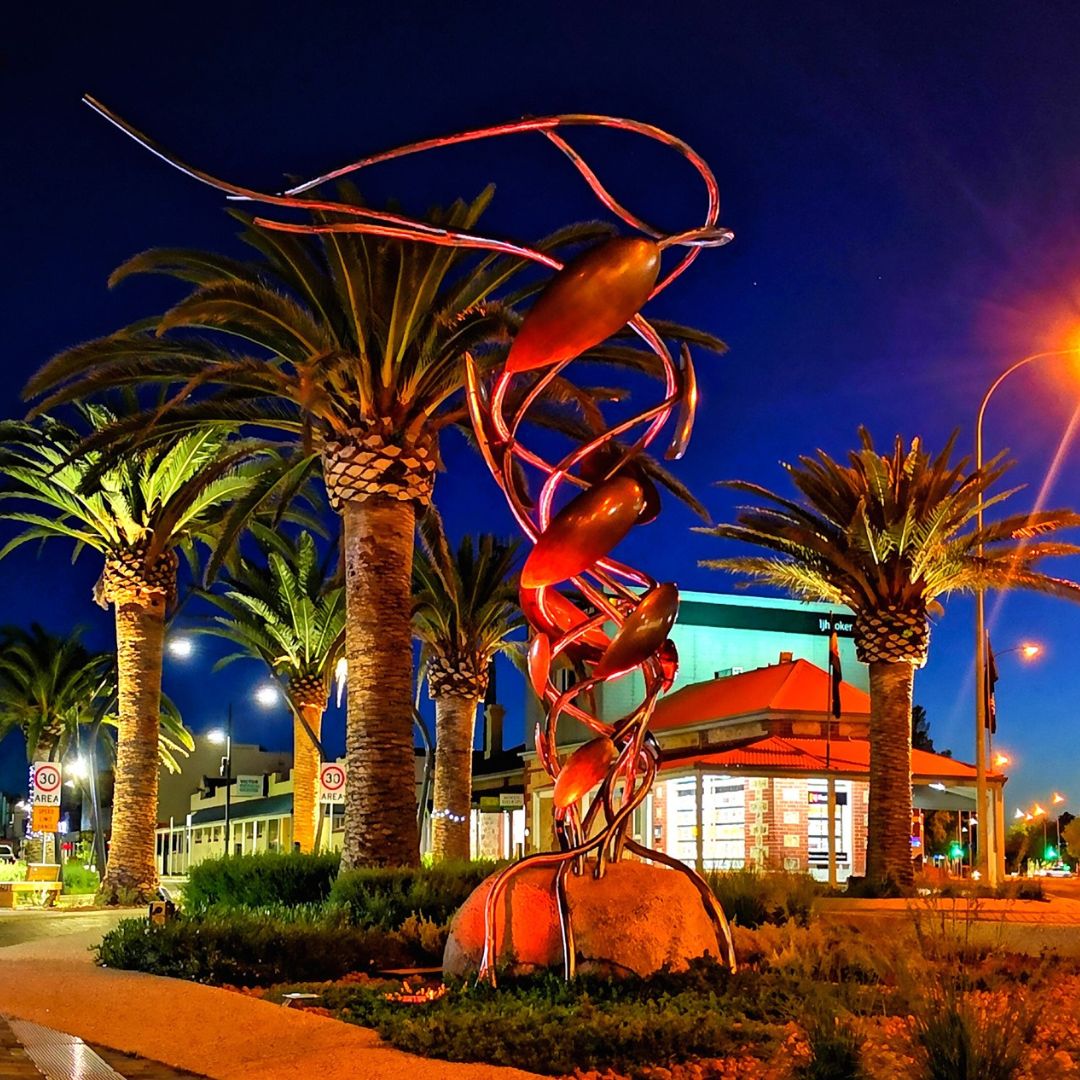
Elemental
Cnr Torrens St and Ocean St, Victor Harbor
Elemental by Karl Meyer is a dynamic sculpture that celebrates the spirit of Victor Harbor. With its bold forms and vivid colours, the artwork reflects the powerful forces of nature – wind, water, and land – that shape the region. Commissioned as part of the city’s Mainstreet Precinct revitalisation, Elemental also symbolises the energy and diversity of the local community. It stands as a welcoming landmark, blending artistic expression with a strong sense of place and identity.
12
Telstra Exchange Building Mural
53 Ocean St, Victor Harbor
The Telstra Exchange Building Mural was completed in 2020 by South Australian artist Nicole Black. This vibrant artwork, located on Ocean Street, captures the essence of Victor Harbor’s coastal beauty with native botanical designs and vibrant coastal tones. Spanning 13 meters, the mural was supported by Telstra and Bunnings, enhancing the town’s aesthetic and celebrating its unique landscape.

13
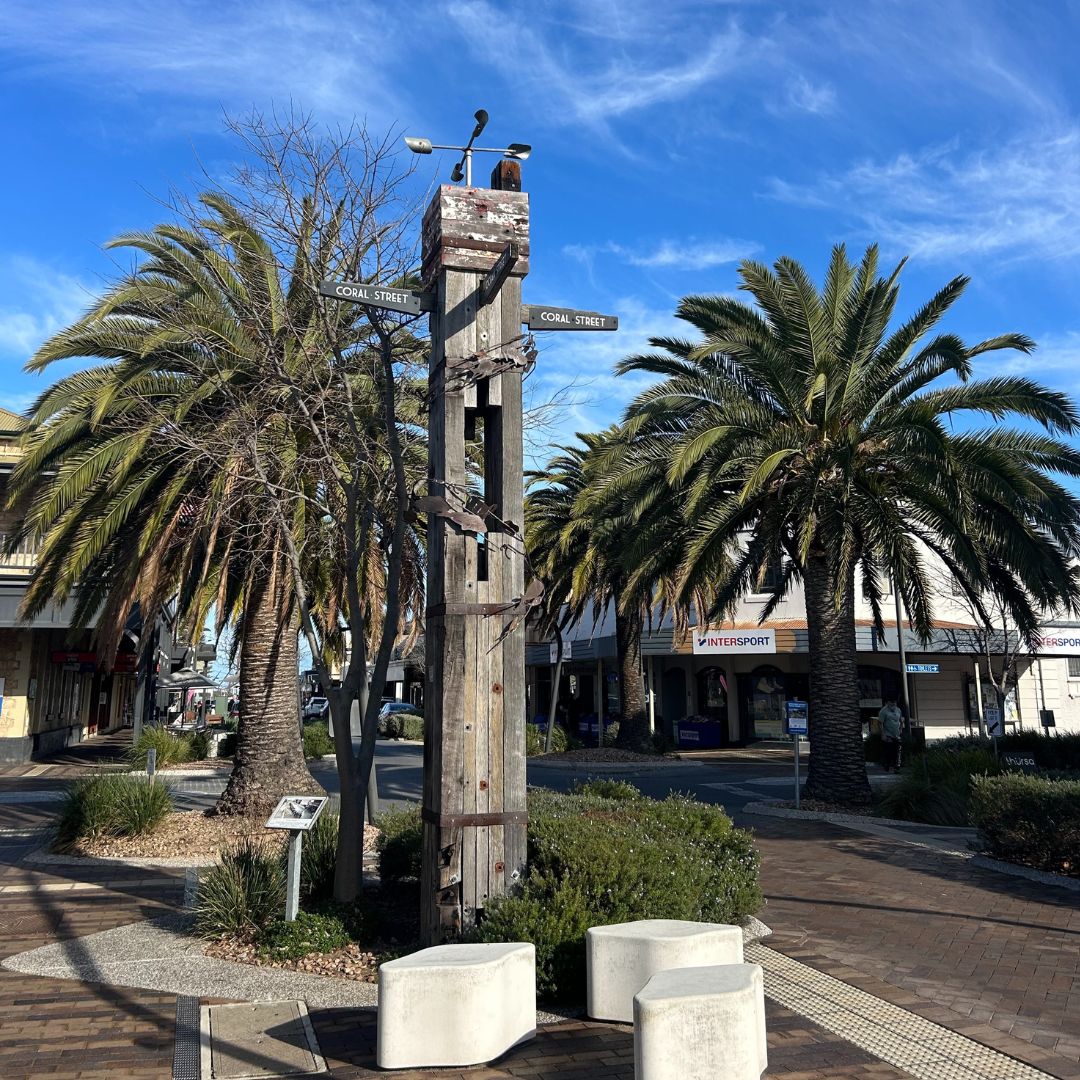
Directional Wayfinding Sign
Cnr. Ocean Street and Coral Street
Local artist Hamish Macmillan contributed a distinctive wayfinding sign as part of the Victor Harbor Mainstreet Precinct Upgrade. Installed at the intersection of Ocean Street and Coral Street, this artwork blends functionality with artistic expression, serving both as a directional aid and a piece of public art. The sign reflects Victor Harbor’s maritime heritage and complements the precinct’s broader design themes, which draw inspiration from the Southern Right Whale and the local marine environment.
14
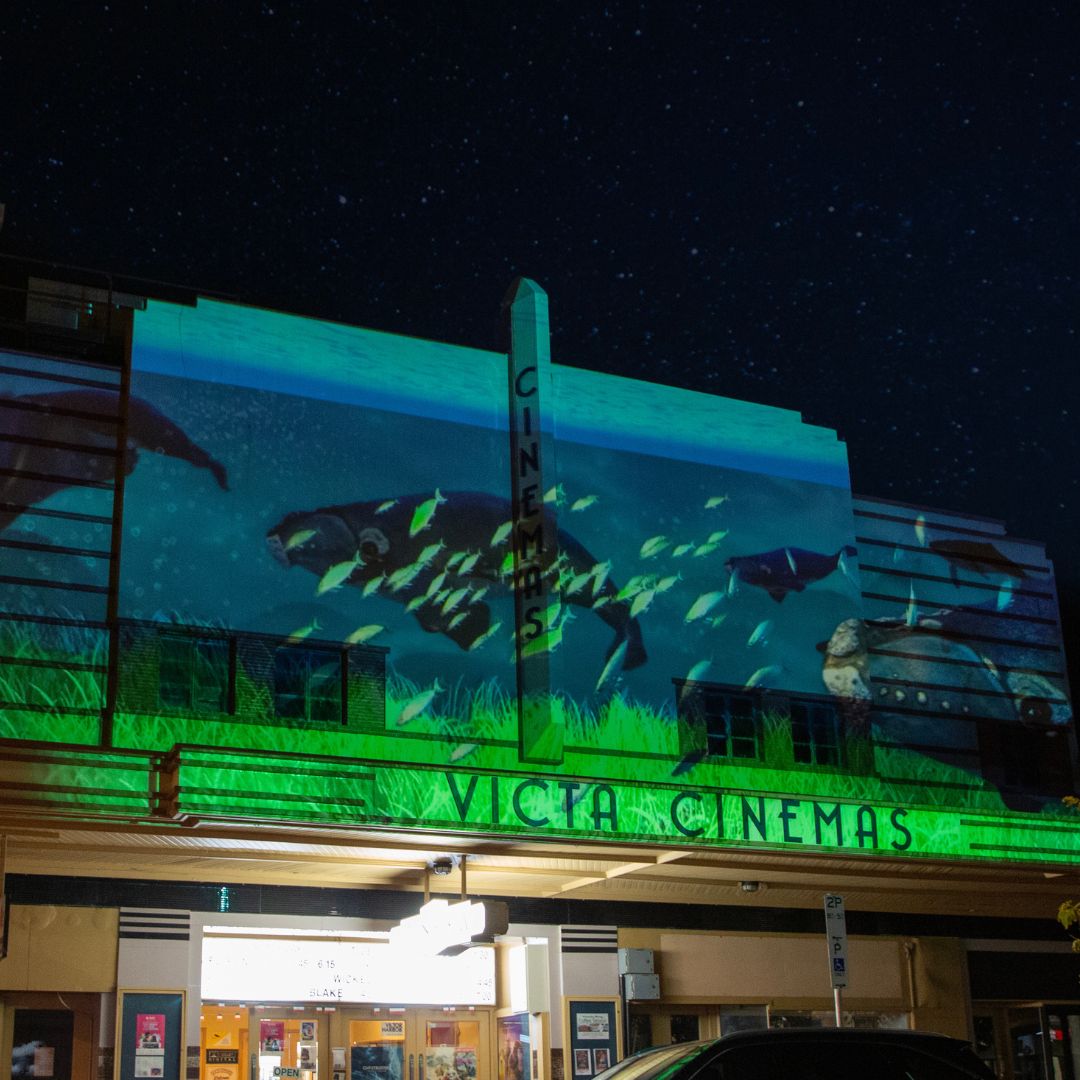
Victa Cinema Digital Art Projection
37-41 Ocean Street, Victor Harbor
Visible after dark on the exterior of Victa Cinemas in Ocean Street. In 2016 Victor Harbor installed South Australia’s first permanent regional architectural projection system, which illuminates digital art pieces on the façade of this beautiful art deco building each evening. The result is a mesmerising and magical digital sequence to inspire and excite viewers of all ages.
15
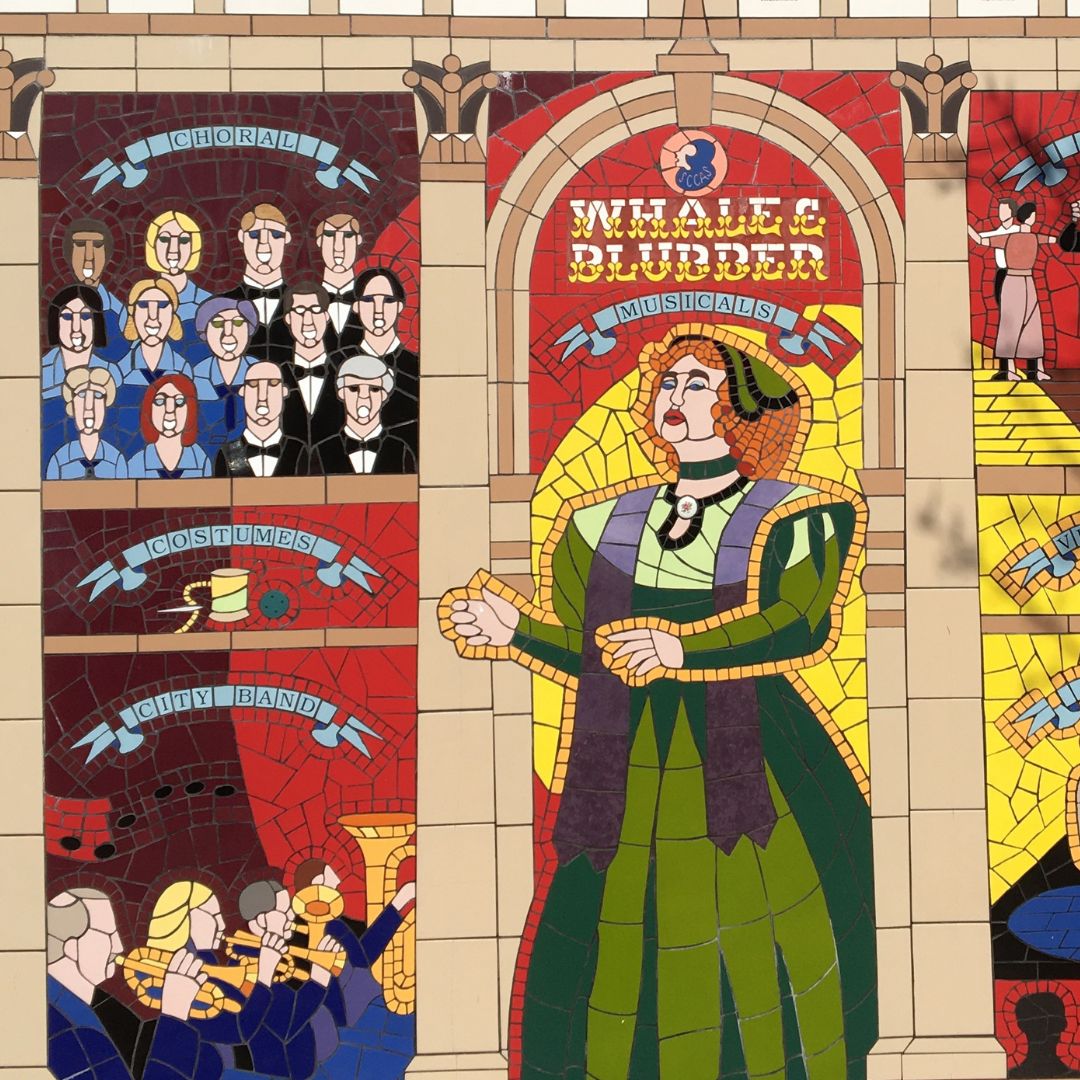
Blubber the Musical
12 Coral Street, Victor Harbor
If the coloured walls on the Victor Harbor Town Hall in Coral Street could talk, they would sing love for the performing arts in a compelling and theatrical manner. Between Coral Street Art Space and the Town Hall you will find Michael Tye’s striking mosaic that was designed in 2007 and illustrates the role the hall has played in the performing arts over the past 100 years.
16
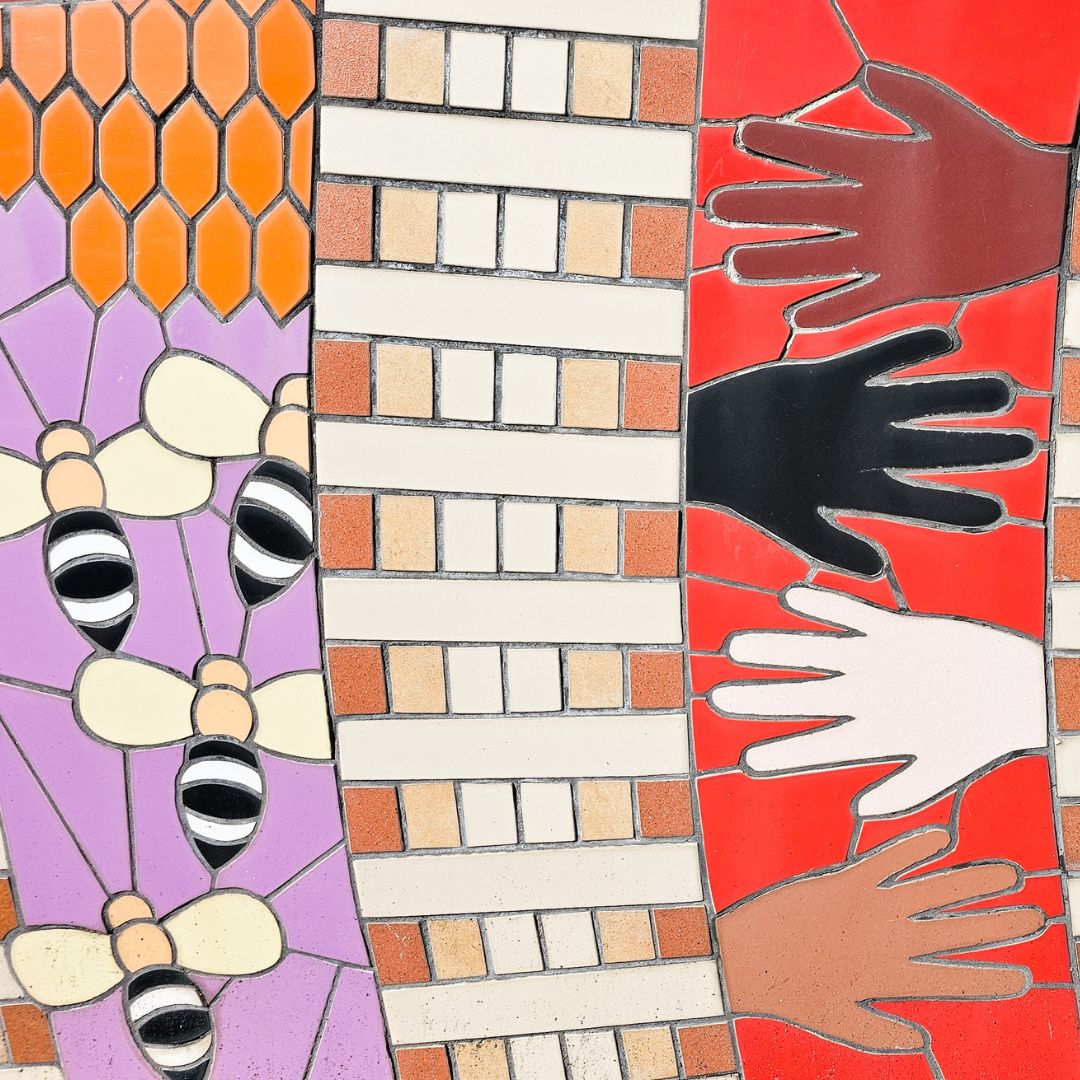
Ngarrindjeri Mosaic
11 Torrens St, Victor Harbor
Designed by artist Mike Tye in consultation with Didge McHughes and Ngarrindjeri Elders, the Ngarrindjeri Mosaic was unveiled in 2014 outside the Old Post Office Building, next to Grosvenor Gardens. This vibrant artwork celebrates the cultural connection of the Ngarrindjeri and Ramindjeri peoples to the land. Funded by Country Arts SA, SAFKI Medicare Local, and the Australia Council, it serves as an important visual representation of local Indigenous heritage.
17
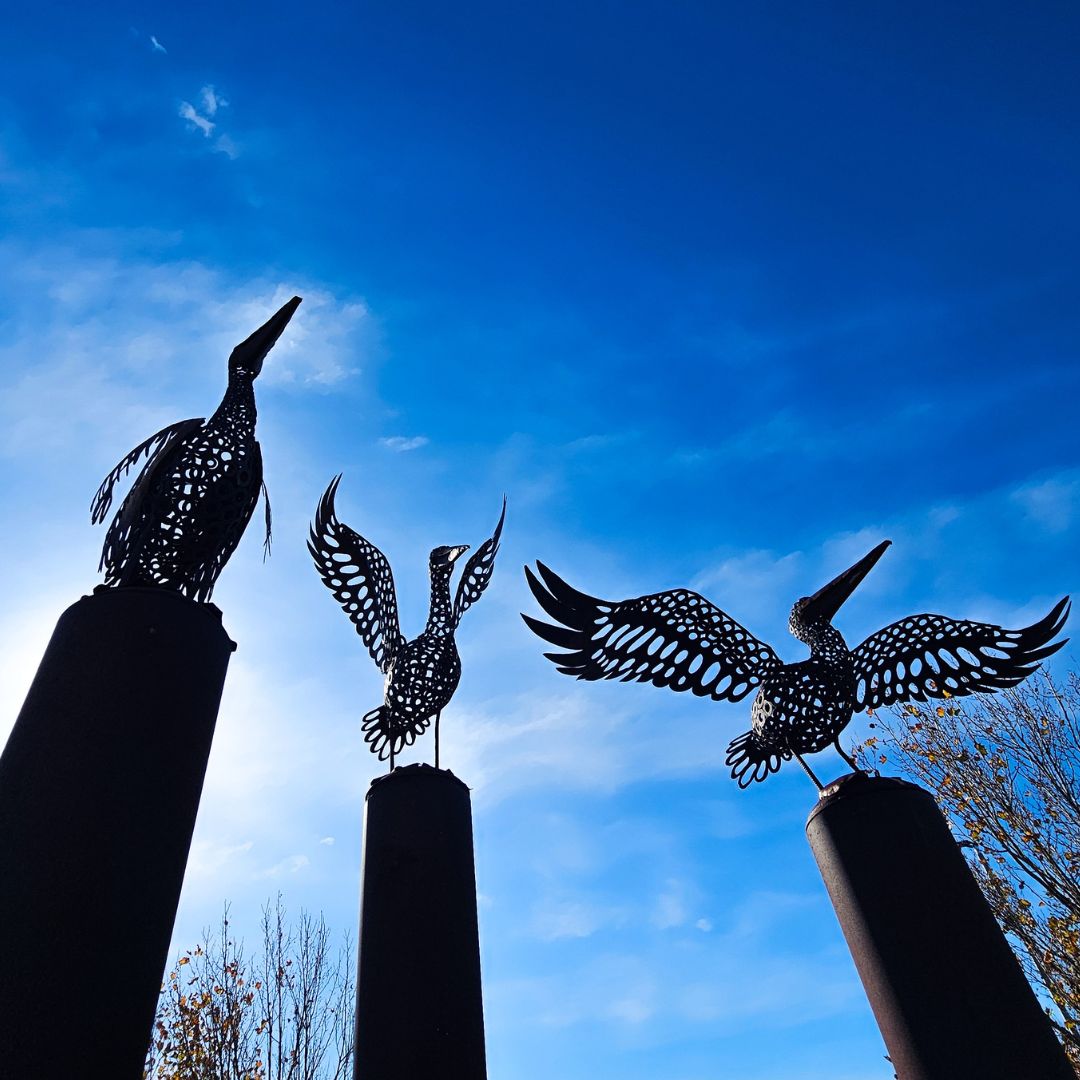
Metal Pelicans
Cnr Crozier Rd & Torrens St, Victor Harbor
This sculpture is located at the intersection of Victor Harbor Road and Crozier Road, adjacent to the Victor Central Shopping Centre. The artwork, by Renmark artist Kevin Schubert, was installed by Victor Central Shopping Centre to enhance the local streetscape and celebrate the region’s coastal identity. The sculpture features stylized pelicans, emblematic of Victor Harbor’s rich maritime environment.
18
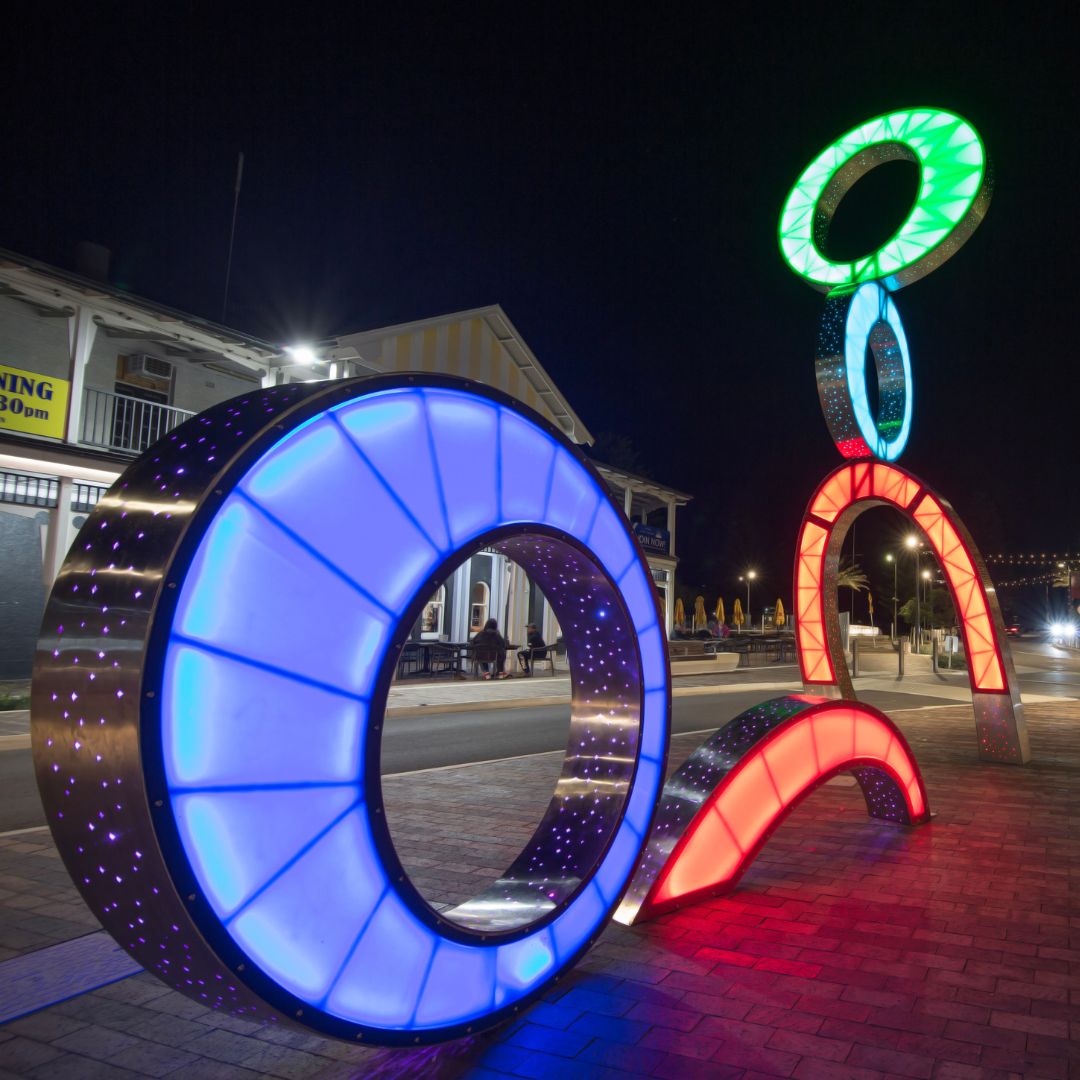
Phosphorescence
Cnr Ocean Street & Albert Place, Victor Harbor
Phosphorescence by SA artist Marijana Tadic is a luminous sculpture that enlivens Victor Harbor’s town centre. Crafted from vibrant plexiglass and stainless steel, the artwork draws inspiration from bioluminescent sea creatures such as jellyfish, offering a visual spectacle during the day. At night, its computerised lighting transforms it into a mesmerising display, celebrating the magic of illumination. The sculpture’s title pays homage to Julia Baird’s book Phosphorescence, reflecting themes of inner light and resilience.
19
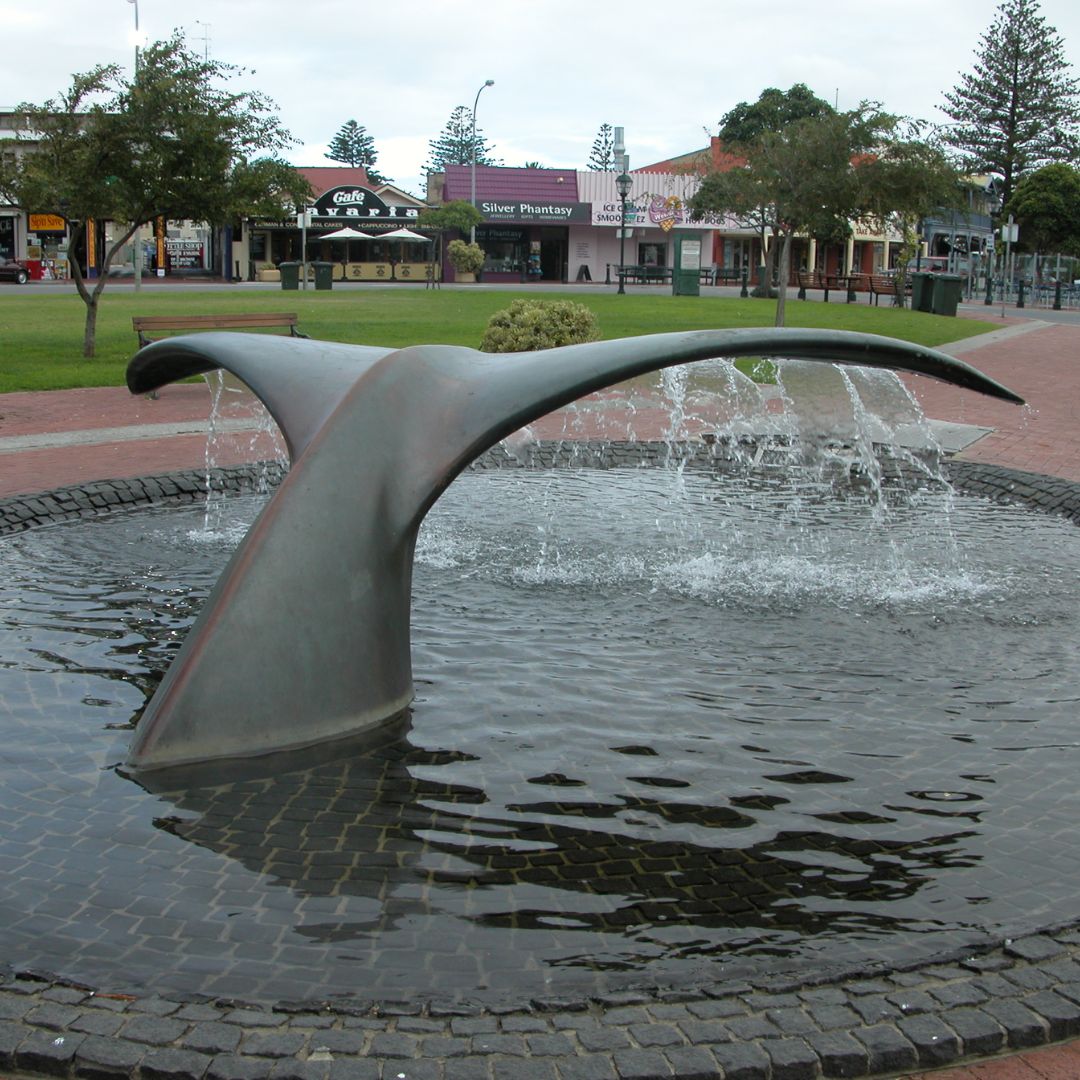
Whale Tail Fountain
Warland Reserve, Victor Harbor
In the centre of Warland Reserve you will find the iconic Whale Tail Fountain. Sculpted in 1993 by Silvio Apponyi, the bronze fountain celebrates the magnificent Southern Wright Whales that visit the coast each winter. Beyond its symbolic meaning, the fountain is also a popular play feature – children delight in splashing around its edges, making it a lively and interactive focal point for families and visitors alike.
20
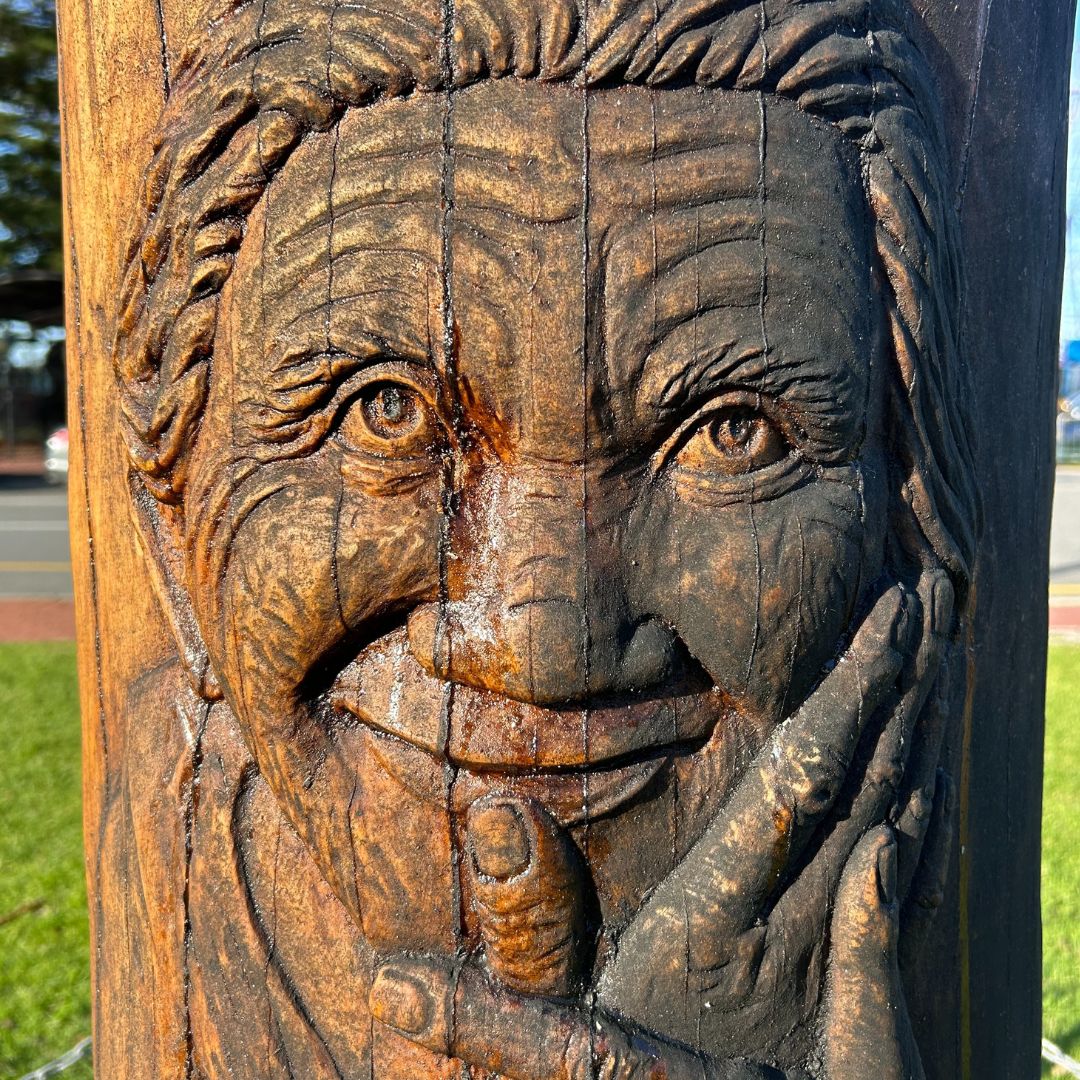
Peace Pole
Warland Reserve, Victor Harbor
Peace Pole by local artist Chris Reid is part of a global initiative promoting peace and unity. Created with support from local Baha’i members and many cultural and religious groups, the sculpture was developed through community workshops at Coral Street Art Space. Crafted from timber using traditional carving techniques, it features peace symbols made by locals and the message “May Peace Prevail on Earth.”
21
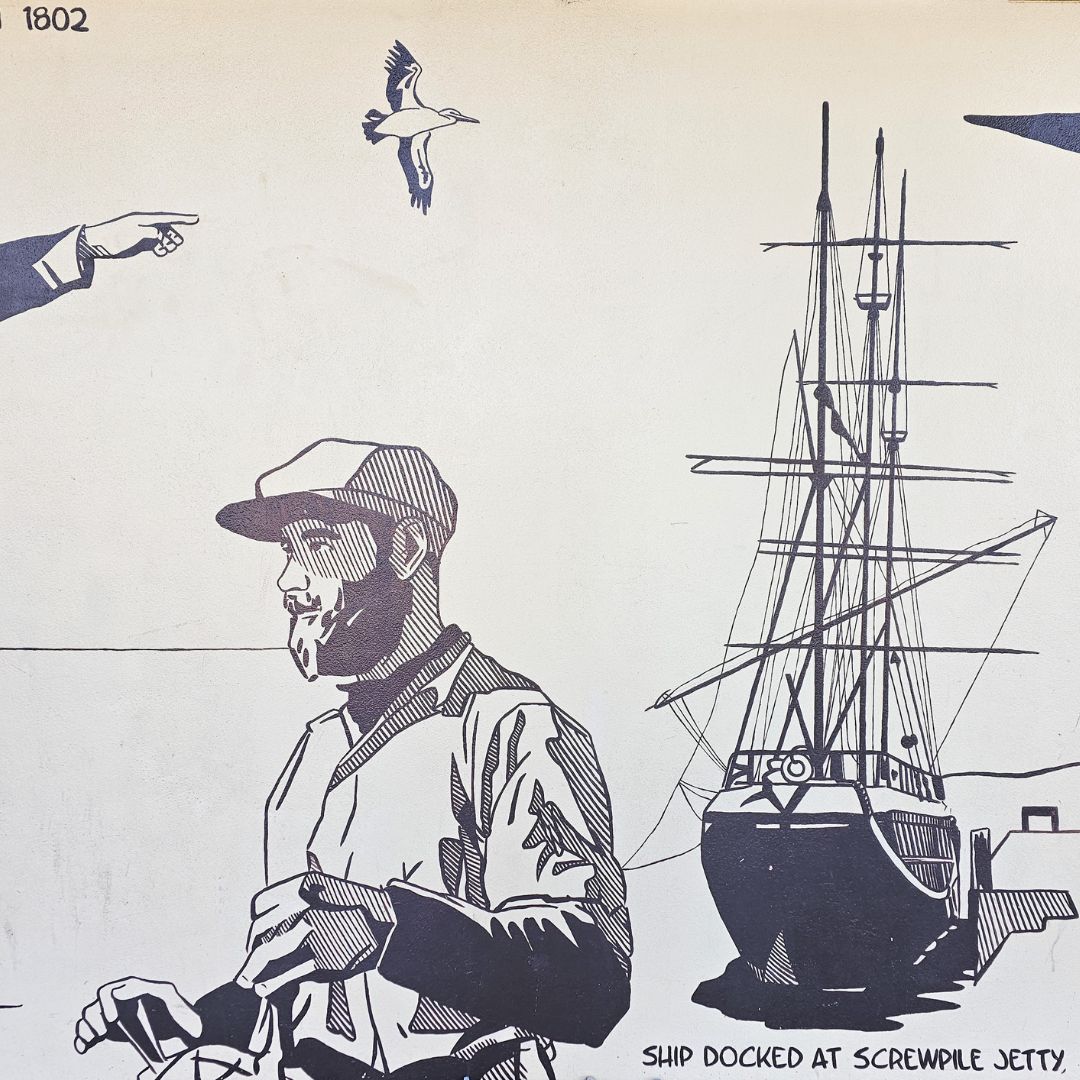
Whaling Heritage Mural
George T Fisher Playground
Located on Causeway Plaza, not far from the Victor Harbor Visitor Centre, this foreshore toilet block features a historical mural depicting the town’s 19th-century whaling industry. The artwork provides a visual narrative of early European settlement and the once-thriving Rosetta Harbor whaling station.
22
On Occupied Territory: Encounter 2002
Esplanade, Warland Reserve, Victor Harbor
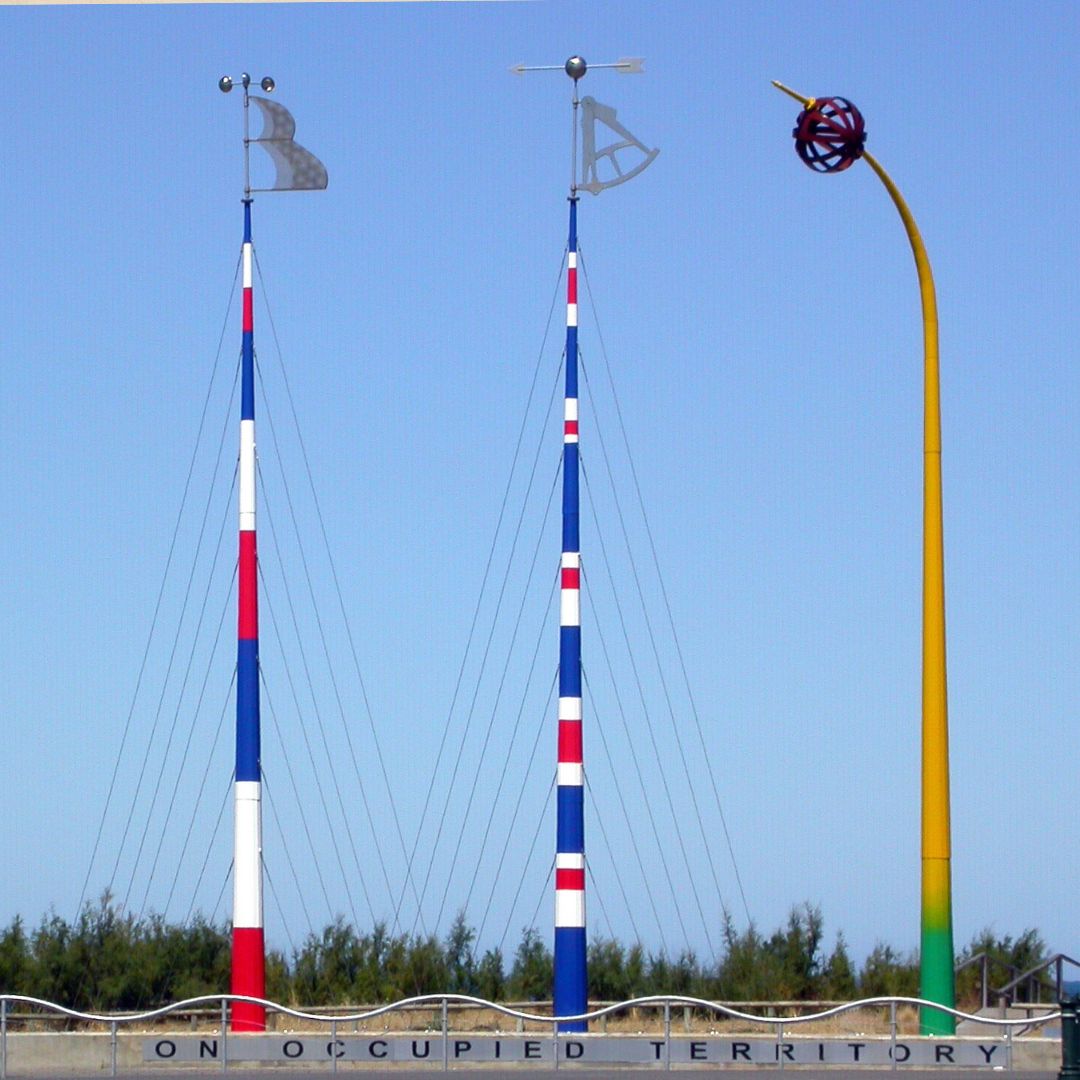
Created by artist Margaret Worth, On Occupied Territory features poles commemorating the 1802 meeting of British explorer Matthew Flinders and French navigator Nicolas Baudin in Encounter Bay / Ngarrindjeri Waters. It was commissioned to commemorate the 1802 meeting and to celebrate “Encounter 2002: three worlds, three visions, coming together.” At the opening, everyone was welcomed to Country by the Ngarrindjeri people, officials exchanged their national flags, and Victor Harbor Council signed an Apology to the Ngarrindjeri Nation.
23
Ngurunderi
Entrance to Granite Island Causeway
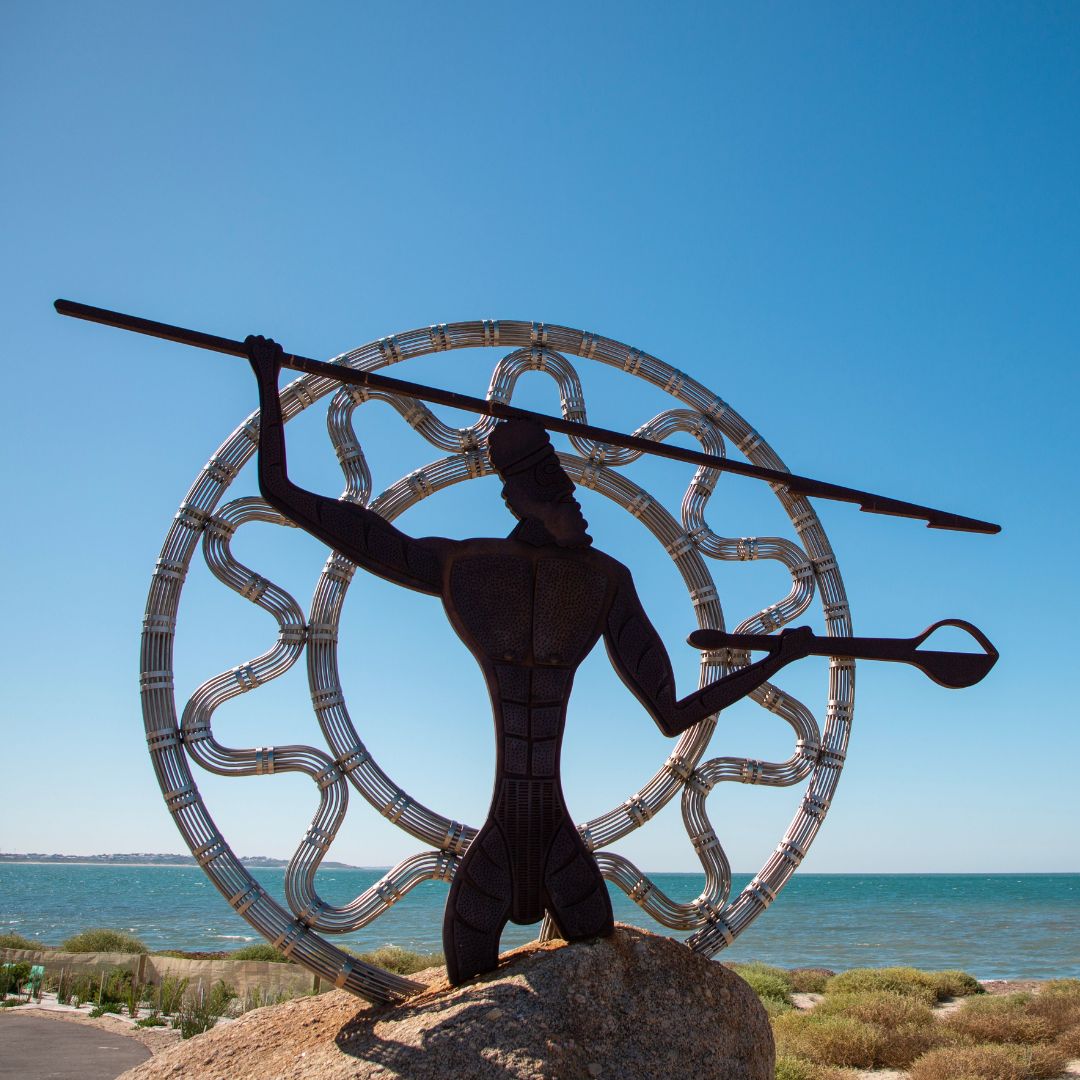
This striking 3.6 metre sculpture depicts Ngurunderi, a central ancestral figure in Ngarrindjeri Dreaming. Created by Ngarrindjeri artist Kevin Kropinyeri and sculptor Karl Meyer, the work honours First Nations stories of land and sea. Commissioned by the
Department for Infrastructure and Transport as part of the Granite Island Causeway redevelopment, it is complemented by sandblasted artworks along the causeway surface.
24
Kaldowinyeri Yarluki
Granite Island Causeway, Victor Harbor
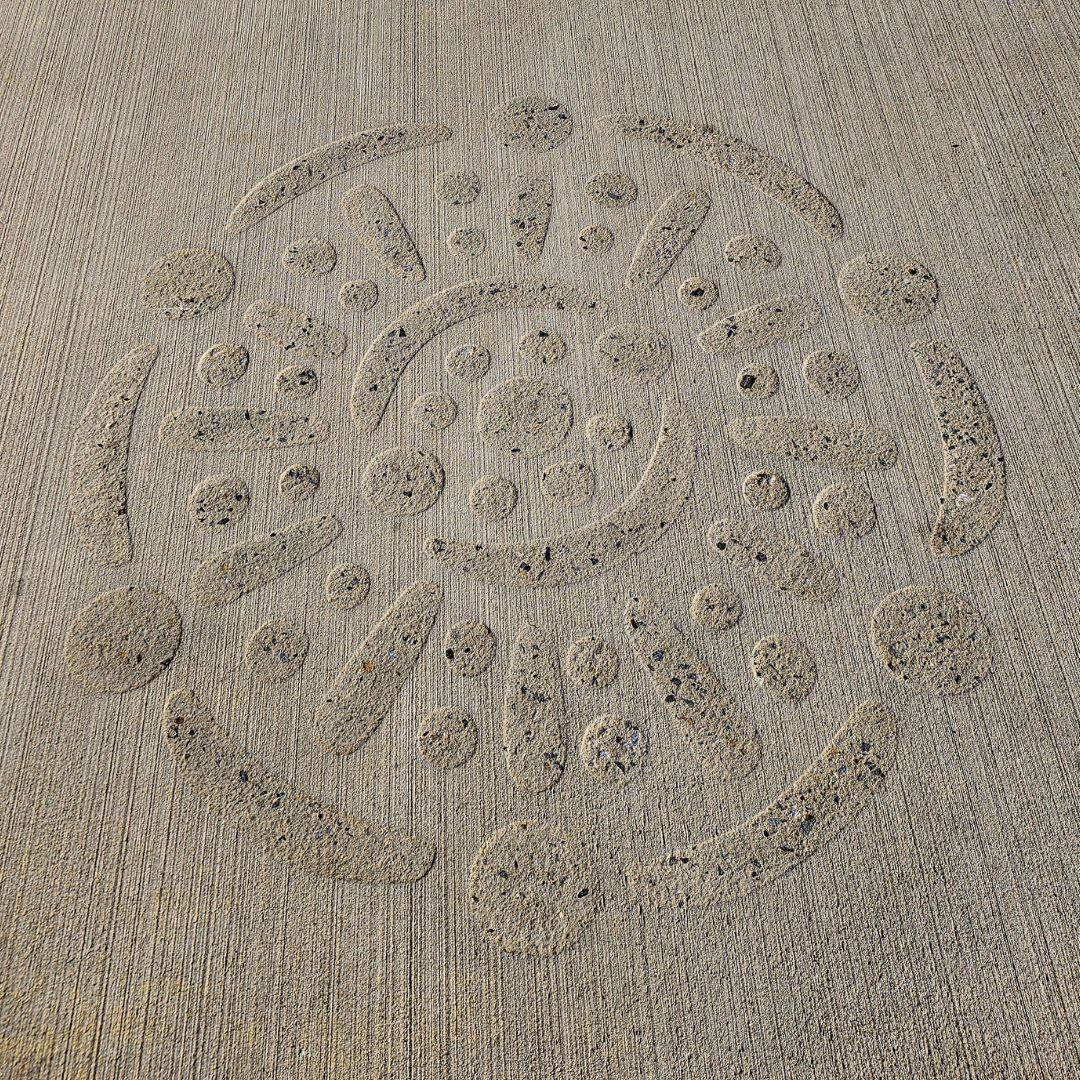
The Causeway, officially named Kaldowinyeri Yarluki meaning “Dreaming Track” in Ngarrindjeri language, is a remarkable fusion of infrastructure and Indigenous art. Stretching 650 metres, it features the longest known integrated Aboriginal artwork in Australia, created by Ngarrindjeri–Ramindjeri artists Cedric Varcoe, Amanda Westley, Kyla McHughes, Kevin Kropinyeri, and Jamaya Branson. Etched into the causeway are Dreaming stories of Kondoli, the fire-bringing whale, and Ngurunderi, the ancestral creator.
25
Bronze Penguins
Entrance to Granite Island, just off the Causeway, Victor Harbor
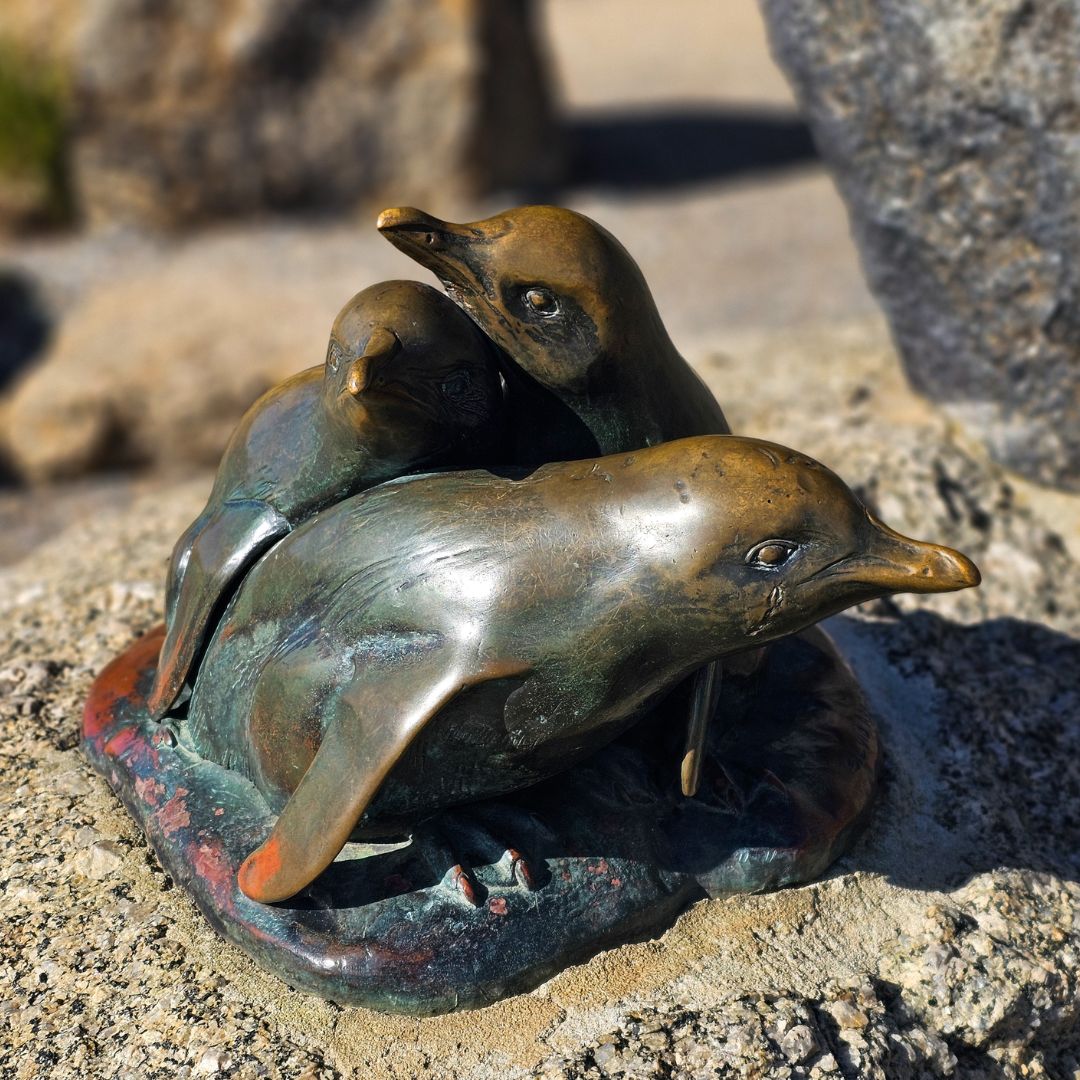
These charming bronze penguins by renowned sculptor Silvio Apponyi mark the entrance to Granite Island (Kaiki). Commissioned by the Department for Environment and Water, the installation celebrates the island’s resident Little Penguin colony and welcomes visitors to this cherished natural reserve. The sculptures are accompanied by entry signage designed in collaboration with artist Martin Corbin.
26
Face of Uncle Henry
Granite Island (Kaiki), Victor Harbor
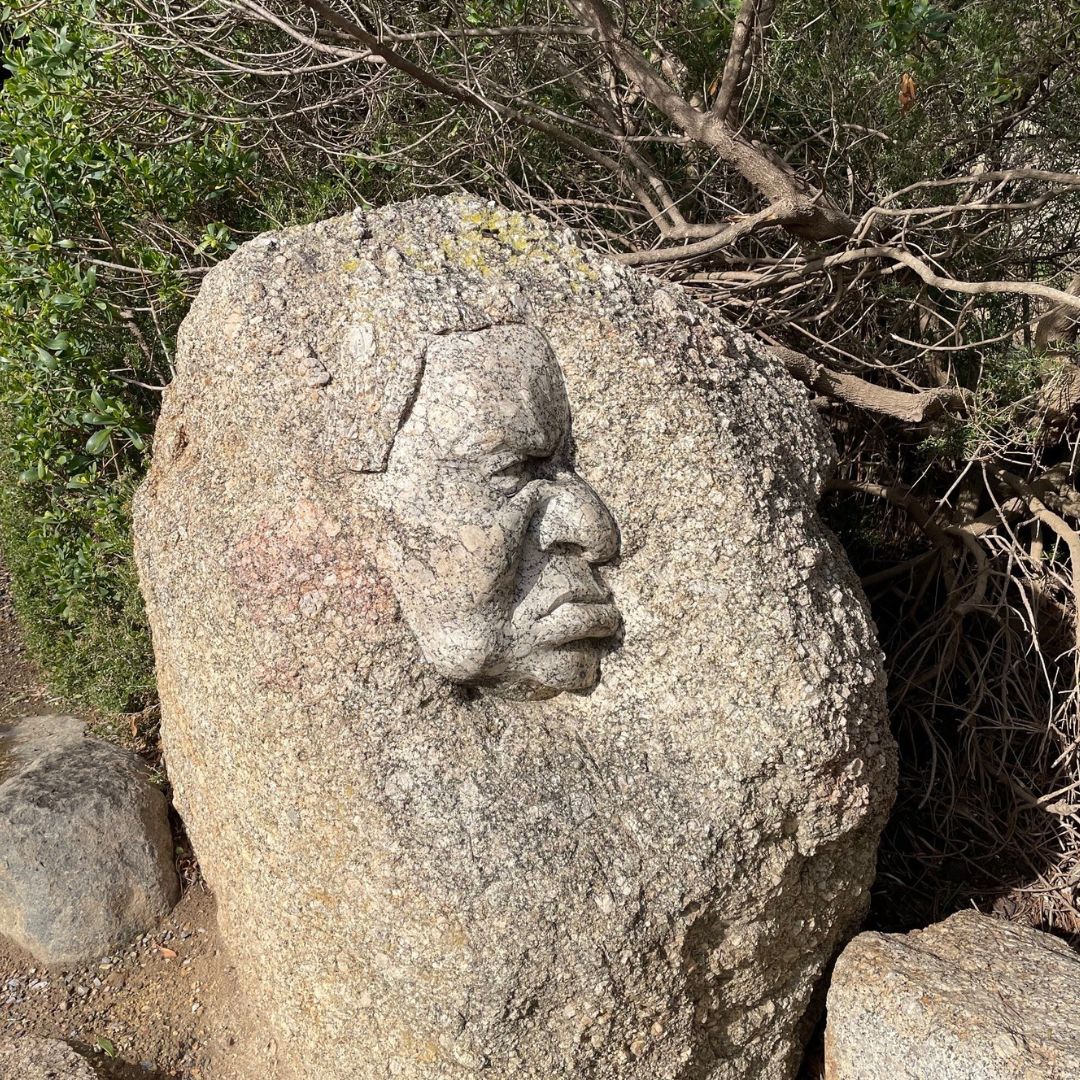
Look closely as you explore Granite Island (Kaiki) and you may find the wise face of respected elder Uncle Henry Rankine gently carved into the granite, gazing out to sea. A proud Ngarrindjeri leader, Uncle Henry was a keeper of cultural knowledge, a custodian of stories, and a powerful advocate for self-determination. His legacy lives on in the landscape he loved. Pause here to reflect, and honour the strength, wisdom, and enduring presence of his spirit.
27
Sea Lion
Towards the cafe, Granite Island, Victor Harbor
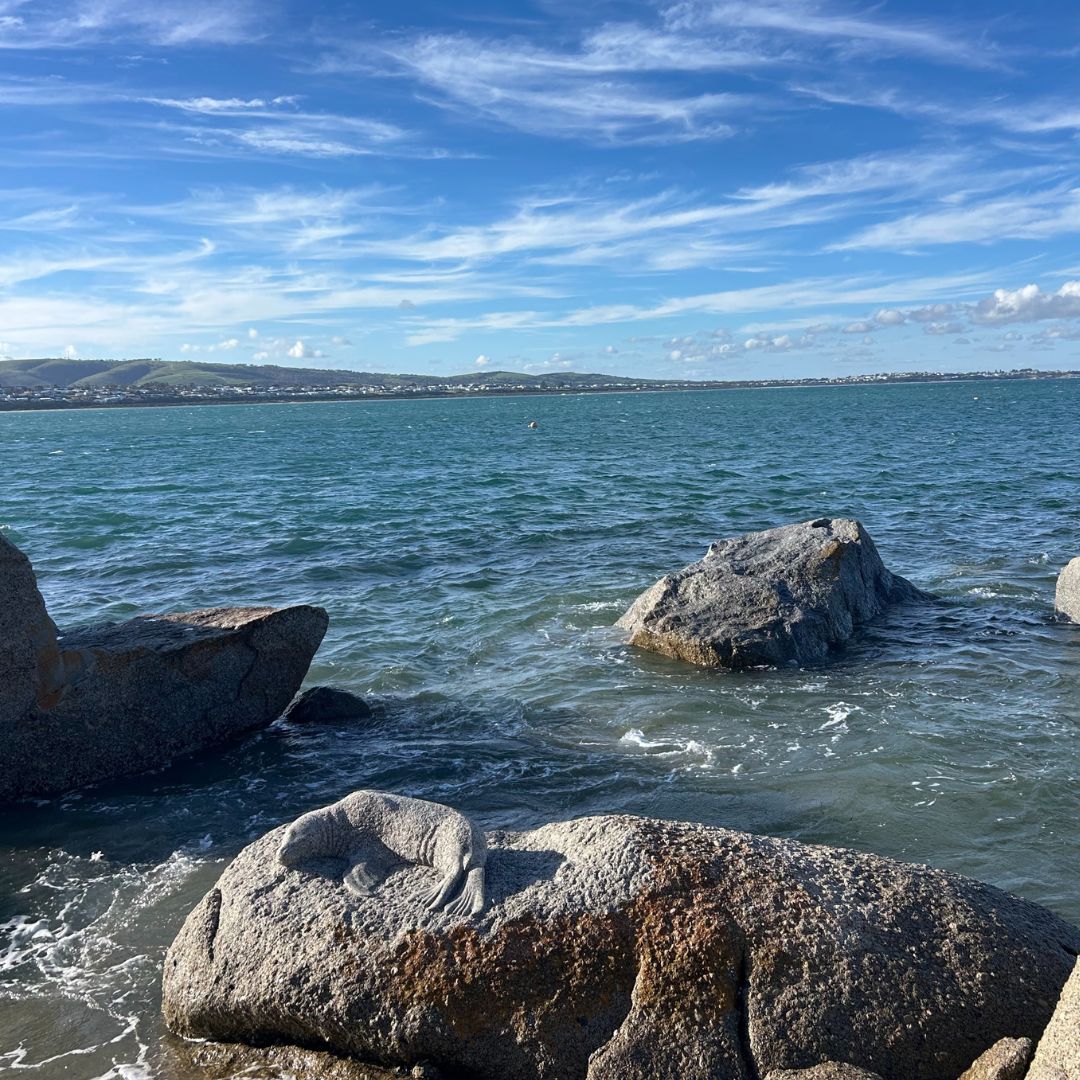
Carved in 1992 by renowned South Australian sculptor Silvio Apponyi, this life-sized granite sea lion rests beside the walking trail on Granite Island (Kaiki). Created in situ from local stone, the sculpture honours the marine life of Encounter Bay and invites visitors to pause and connect with the island’s natural beauty. Apponyi is widely recognised for his detailed animal sculptures, many of which feature native Australian wildlife.
28
Moonya Inyeri Ngarrindjeri
1 Bay Road, Victor Harbor
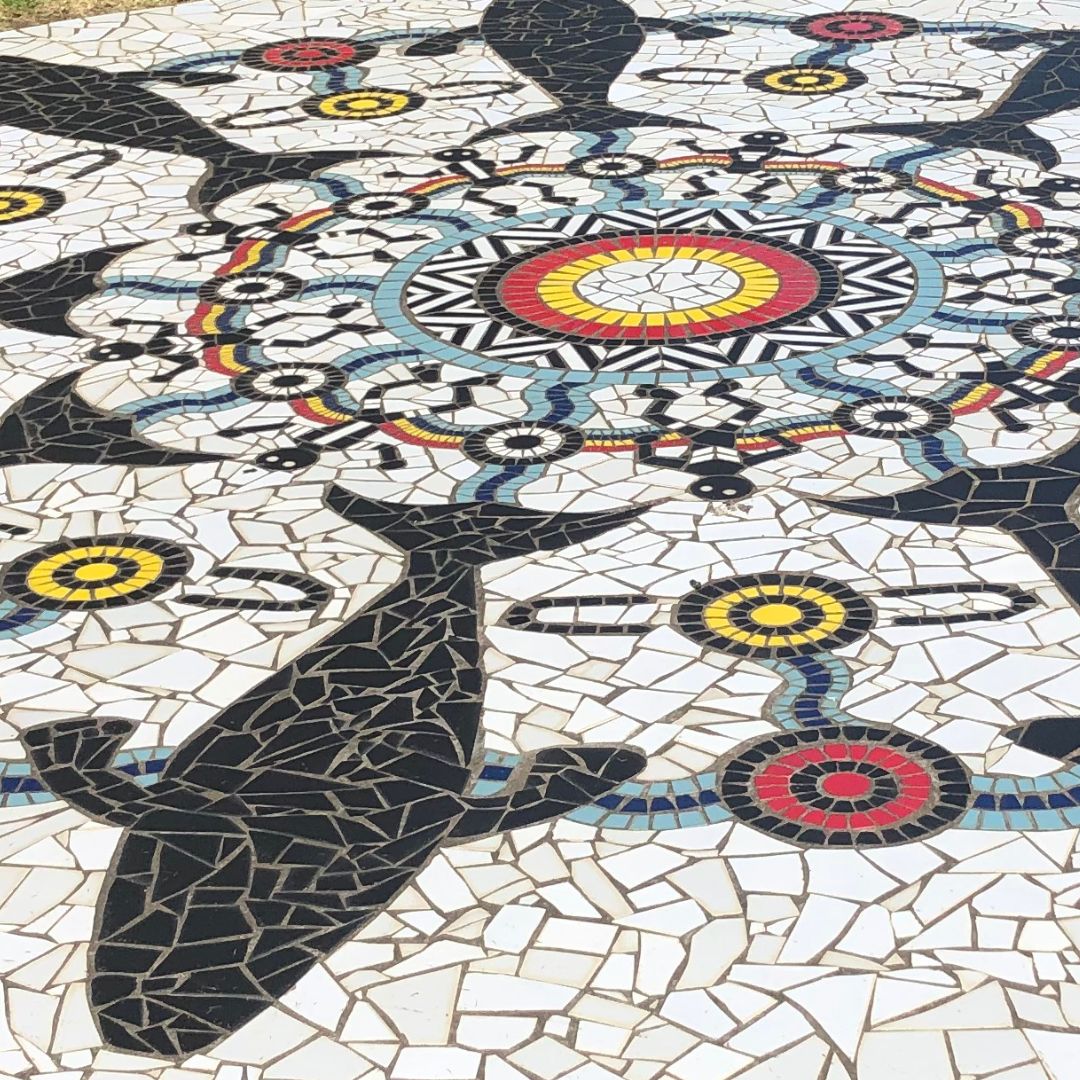
This Kondoli mosaic art piece is located at the front of the City of Victor Habor Civic Centre and Library. When translated, the artwork’s
name means “safe place belonging to people.” It was designed by Jeff Kropinyeri, and was constructed by many volunteers under the
tutelage of Gina Allain. It was installed in 2008.
29
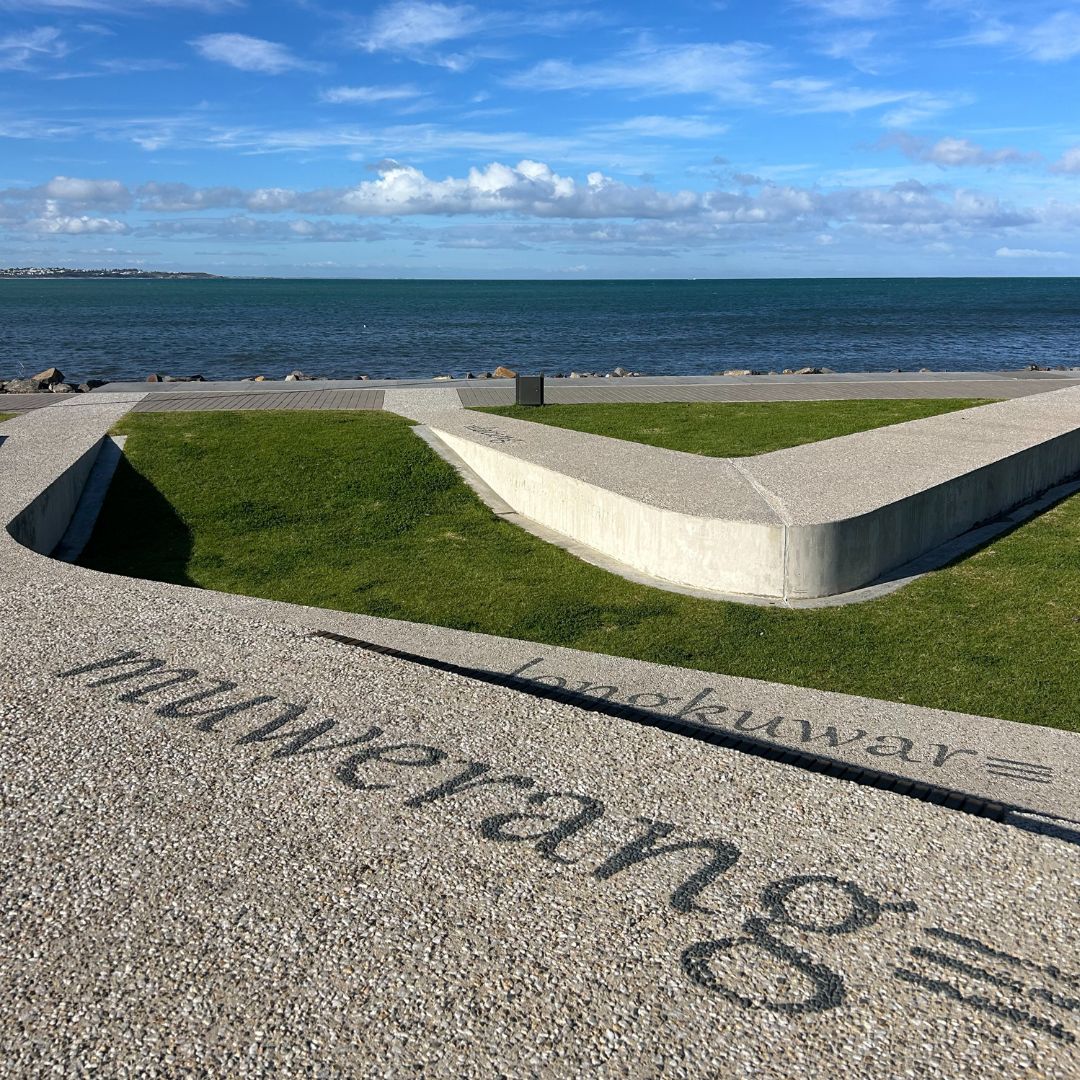
Muwerang Mosaic Project
19 Bay Road, Victor Harbor
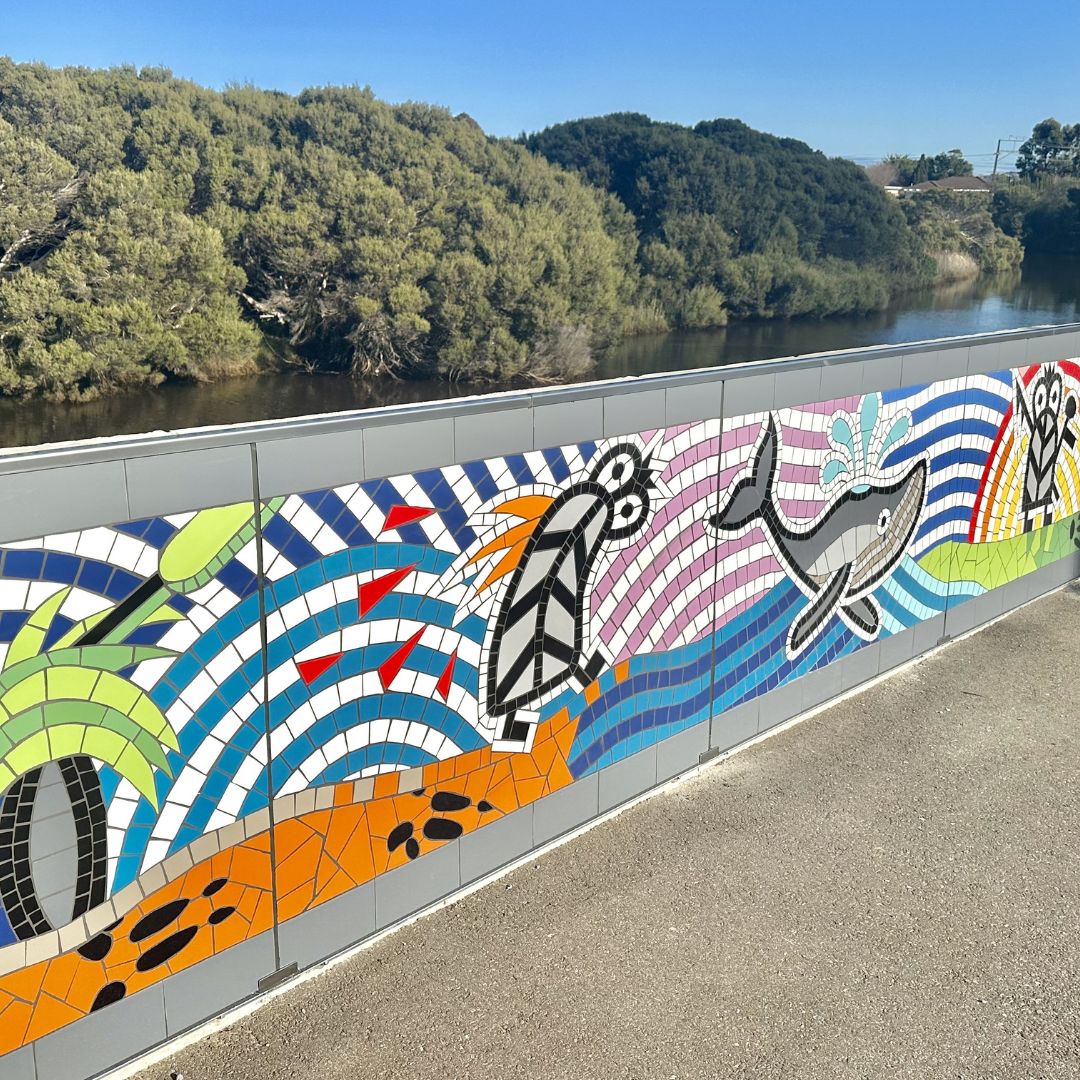
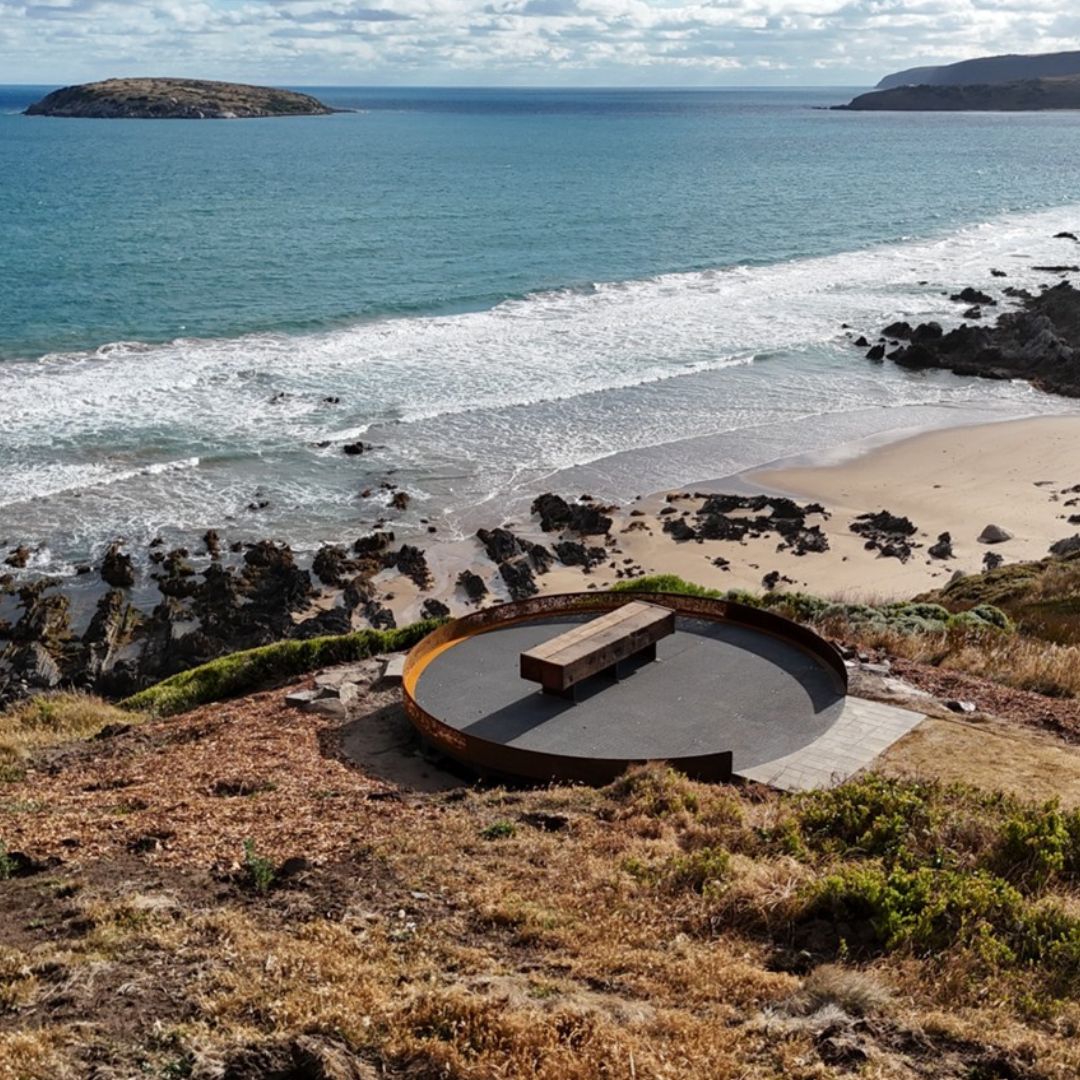
Installed in June 2023, this 36m long mosaic adorns the balustrade along Bay Road, adjacent to the Inman River (Muwerang). Created by artists Mike Tye and Cedric Varcoe in collaboration with the local community, the artwork represents the deep connection of the Ngarrindjeri and Ramindjeri peoples to the river. It stands as a testament to cultural heritage and community unity.
30
Whaler’s Well
121 Franklin Parade, Encounter Bay
The remains of this brick-lined Whaler’s Well, part of the Rosetta Harbor Whaling Station established in 1837, were uncovered during construction of The Bluff Boat Ramp car park. Once used to draw water for the whaling crews, the well now anchors a striking public artwork by local artist Matt Turley. Surrounding it are three corten steel sculptures: a whale, a group of whalers, and a try pot, each symbolising the early industry that shaped Victor Harbor’s European settlement and maritime history.
31
Longkewar Lookout
The Bluff – Longkewar – Kongkengguwarr – Rosetta Head
Set upon one of Victor Harbor’s most iconic natural landmarks is a powerful artwork by Ngarrindjeri artist Cedric Varcoe. The Bluff project blends Indigenous storytelling with built infrastructure and environmental sensitivity. Varcoe’s artwork, set within a newly constructed pathway and lookout, invites quiet reflection and connection to Country. With recycled timbers from the old causeway, native plantings, and sweeping ocean views, this award-winning site is a cultural and environmental landmark shaped by community and Country.
Only an hour south of Adelaide on the Fleurieu Peninsula, Victor Harbor has cemented itself as a go‑to fishing destination for many anglers in SA after a quick escape and productive options. One of the real plus points of the area is the family‑friendly and low‑fuss land‑based fishing on the doorstep of Victor Harbor, which doesn’t require you to own a boat, or a huge financial outlay to enjoy.
You can easily sneak a line in between shopping and sightseeing while in the area, or make a day of it, and still reasonably expect to fish including snapper, whiting or squid and have a fun time – it’s extremely convenient!
From jetties, sheltered shorelines, and rivers, to high‑energy beaches, you’re well catered for at Victor Harbor if you don’t have a boat. Let’s take a whirlwind look at where to start.
VICTOR HARBOR JETTIES
A fishy focal point for visitors to Victor Harbor is the jetty structures of the area, which provide safe and easy access platforms for anglers of all experience levels.
The Screwpile Jetty on Granite Island is probably the most productive Victor Harbor jetty and has produced some remarkable captures of mulloway, big sharks, kingfish, and snapper in the past. It’s probably most noted however for its consistent catches of squid when the water is clear, to go with trevally, mackerel, tommies, and salmon of mixed sizes. At night various shark species are also likely for mad‑keen anglers, and it is a spot that can truly provide the odd surprise capture. The nearby rock ledges can also give up similar species, albeit they’re trickier to fish including whiting and garfish.
The lengthy and newly updated causeway that you walk across to Granite Island to reach the Screwpile Jetty is also fishable for squid, snook, tommies, garfish, and other species. A good tip is to try using floats for squid and others here as the weedy bottom can be unforgiving if you fish too deep. The causeway is long enough to ensure you travel light when fishing on Granite Island, and it’s not uncommon to see local anglers using trollies to transport their gear to the island – take only the essentials if you can.
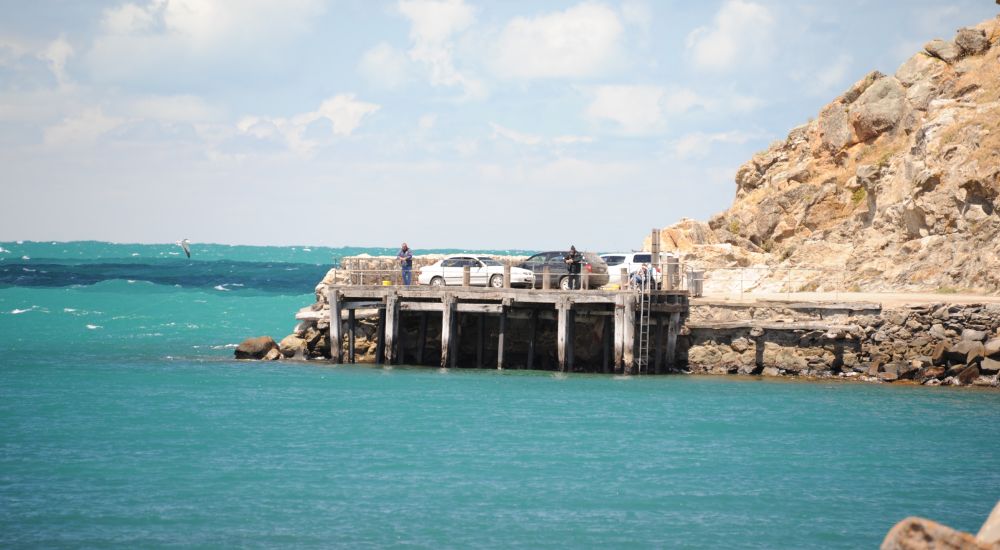
The other option is the Bluff Jetty, which is reached by driving up the short unsealed road just past the local boat ramp, and Whalers Seaside Dining restaurant. The Bluff Jetty fishes much the same as Screwpile, although is considerably smaller in size. It’s a case of first in best dressed for the best position on this small but productive structure, that’s ideally tucked inside the point to offer great wind protection. Big squid and tommies are a specialty here, but again a spread of species is possible.
SHELTEreD BEACHES
Sheltered, family-friendly beach fishing can be found in the more sedate waters of the Victor Harbor foreshore. The foreshore beach extends from the boat ramp, right through to Chiton Rocks, offering both sheltered water to the medium intensity conditions closer to Chiton.
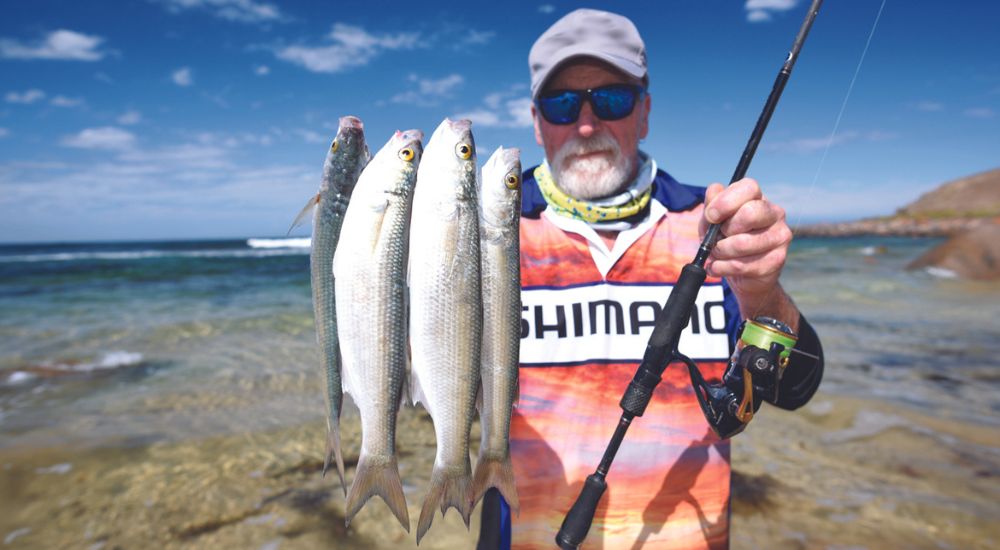
The Victor Harbor foreshore provides shallow water fishing for garfish, salmon, mullet, the odd whiting, and flathead, plus a mixture of other species. Try using a little berley to bring the fish to your area and you should rustle up a feed here.
As you head out of town towards Chiton Rocks, the extra wave action and water depth will encourage bigger fish closer to the beach. Gummy and elephant sharks, rays, mulloway, salmon, and many other fish are caught along here. It can be worth fishing at night if chasing bigger targets in the area, but daytime is productive for many of the smaller species.
KINGS BEACH
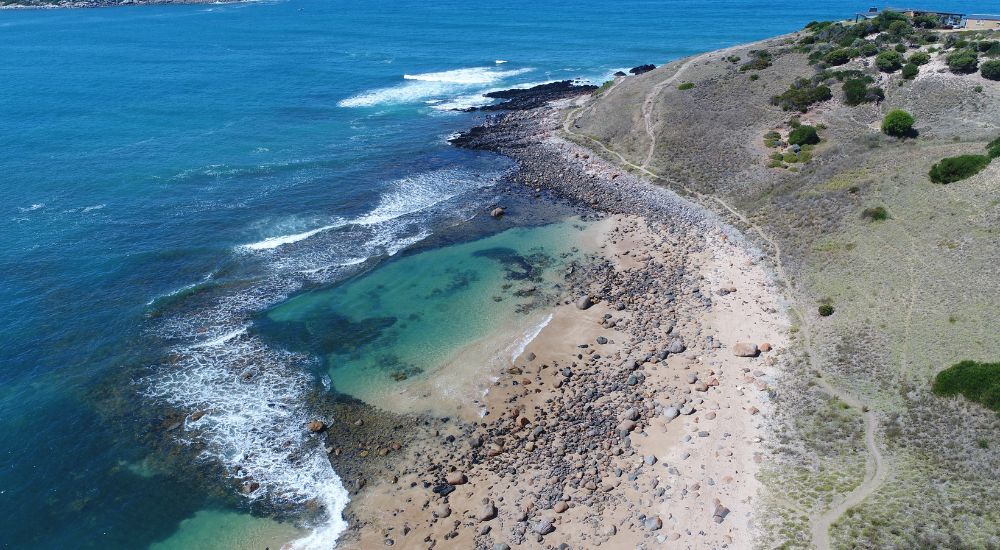
Kings Beach regularly appears in fishing reports from the area, and is located to the right of The Bluff and Petrel Cove just outside of Victor Harbor, and is accessed via a short dirt road that ends at an obvious car park, with a lookout that you can use to spot whales over the cooler months or simply absorb the stunningly rugged coastal vista before you. From here the walk to Kings Beach is around 10-minutes or so along the Heysen trail.
While the beach can be productive, it’s usually the lagoon that’s the centre of angler attention given it provides calm water and consistent fish. The lagoon is actually a fish trap constructed by the Ramindjeri Aboriginals and is a classic example of an intertidal fish trap. By building up the outer edge with rocks, on a low to medium tide fish are largely bound inside the confines of the lagoon. It works too, with schools of mullet sometimes stuck inside making for easy pickings, with garfish, salmon trout, tommies, and various rock species typical catches as well.
Waitpinga and Parsons Beaches
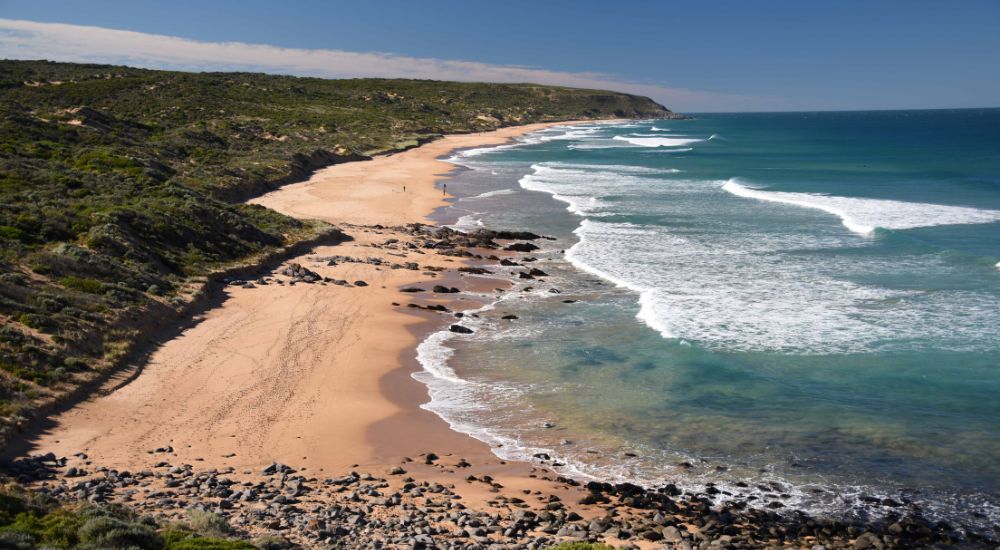
Surf fishing is a crowd puller to the Victor Harbor area, with the most high profile beaches being Waitpinga and the nearby Parsons. Conveniently they’re only 15 minutes away or so from Victor Harbor, and both have reputations for great salmon fishing.
Boardwalk access is possible to Waitpinga at several points, including both ends of the beach. Parsons and Waitpinga have a mutual carpark, where you can look over the respective beaches, and sometimes even spot salmon schools. Thankfully there are access points here if you do happen to spy some!
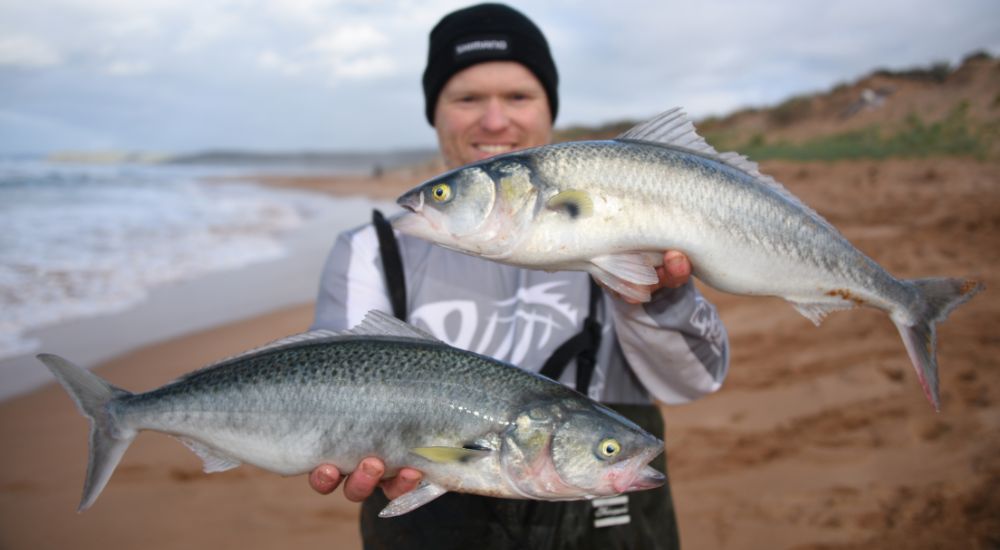
Both beaches, but especially Waitpinga, are known for their dependable gutter formations, and in season (roughly April to September) you’ll catch salmon of all sizes more trips than not, with yellow-eye mullet also a regular (and tasty) catch. Sharks after dark, and the odd mulloway are possible also. Even if you’re not fishing these beaches are spectacular locations to visit and admire.
RIVERS AND LAKE
A great contingency for the beaches and offshore fishing in the area, when it’s windy, is chasing black bream in Victor Harbor’s rivers and lakes.
Sheltered shores and estuaries attract salmon, garfish and tommies. The estuarine zones offer an opportunity for freshwater fishing enthusiasts to try baiting along creek outlets and calmer inlets.
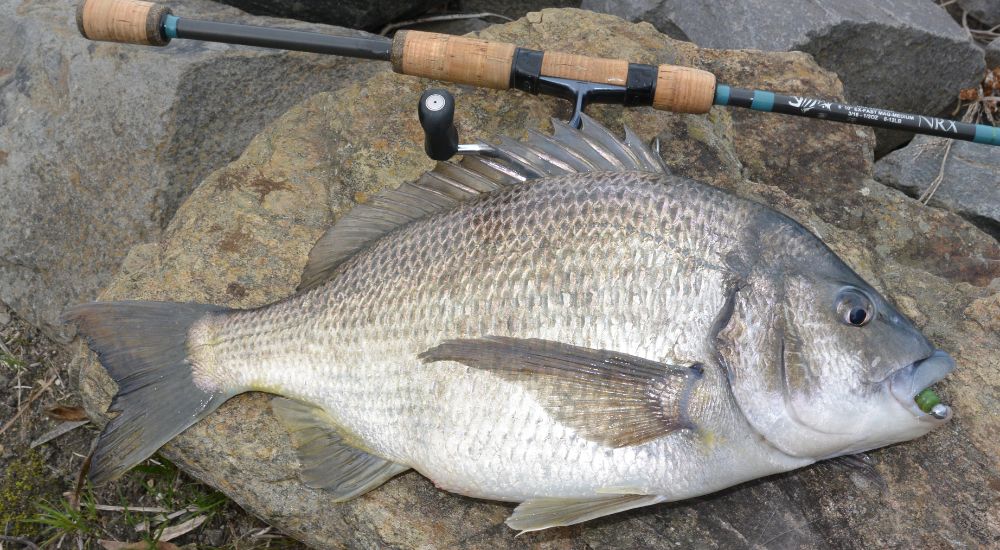
The Hindmarsh and Inman rivers, both of which are quite narrow, are easily found in town and have populations of bream of all sizes and yellow-eye mullet. The fish here can become quite wily given the tight water, and minimalistic rigging and stealthy bait and lure tactics are best.
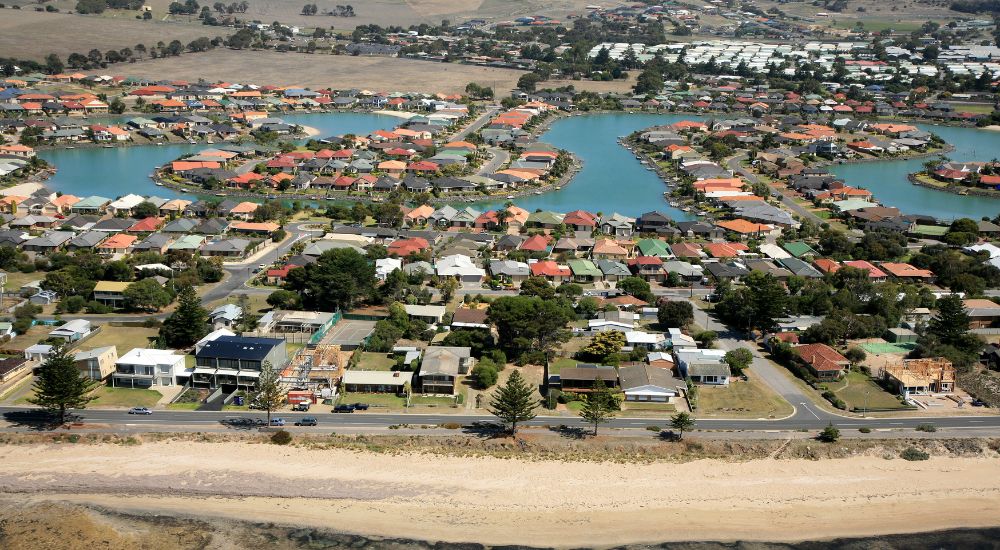
Encounter Lakes is a manmade lake system basically in the middle of Victor Harbor located at Encounter Bay as you head towards The Bluff, just past the local hospital. The lakes are lined with residential properties, reserves, and the odd public park and beach. For anglers, there are multiple access points to the water around the lake, with the two public parks having beaches that are used regularly by those launching kayaks.
Black breams are a popular catch in the lakes and are caught around any artificial structure in the system and from the sandy flats, and it’s a sneaky little option to consider. All fish in the lake must be returned, however, and not kept.
All in all, Victor Harbor is perfectly positioned to offer you a diverse shore fishing experience within easy striking distance of the city. When visiting call into Tonkins Sports and the BCF store for all your bait and tackle, with other select service station outlets also providing supplies – happy shore fishing!
FISHING CHARTER OPTIONS
Prefer deeper water or guided experience? Consider a fishing charter departing from Victor Harbor. Operators run half‑day or full‑day trips into Encounter Bay and beyond, giving you access to reef species, kingfish, snapper and more, even with gear and bait supplied.
WHERE TO BAIT YOUR LINE
Granite Island Screwpile Jetty
Petrel Cove and rock shelves
River outlets around Encounter Bay for mixed species
Surf beaches along the coast
TIPS FOR LAND‑BASED ANGLERS
Use light rigs for whiting and squid, heavier for mulloway.
Fish at dawn or dusk for highest success.
Always carry bait such as beach worms, pilchards or squid strips.
Check tide tables—late incoming tides often bring fish in closer.
FAQs
Q: What species can I fish including from shore?
A: Expect to fish including snapper, salmon, whiting, trevally, squid, sharks, tommies and garfish—all typical catches from jetties, beaches or rock ledges.
Q: Are fishing charters available if I prefer a boat trip?
A: Yes. A fishing charter from Victor Harbor services Encounter Bay and reef grounds, with full gear and bait included.
Q: Is freshwater fishing possible here?
A: While the area is primarily saltwater, freshwater fishing can be undertaken near estuary creeks flowing into Encounter Bay and smaller inland waterways.
Acknowledgment Of Country
Visit Victor Harbor acknowledge that the Ngarrindjeri and Ramindjeri people are the Traditional Owners of our beautiful lands and surrounding waters. We recognise and respect the cultural connections the past, present and future Traditional Custodians have. We are committed to working with the Ngarrindjeri and Ramindjeri people, supporting their role as custodians of their lands and helping ensure the future prosperity and cultural enrichment of the community.
This website was produced and managed by the City of Victor Harbor.